





After over three decades of service in Spain’s Policia Nacional, María Carmen Muñoz González is now INTERPOL’s Director of Counter-Terrorism. Four months into her new role, she shares her insights into the global challenges of terrorism today and how INTERPOL is uniquely placed to meet them.
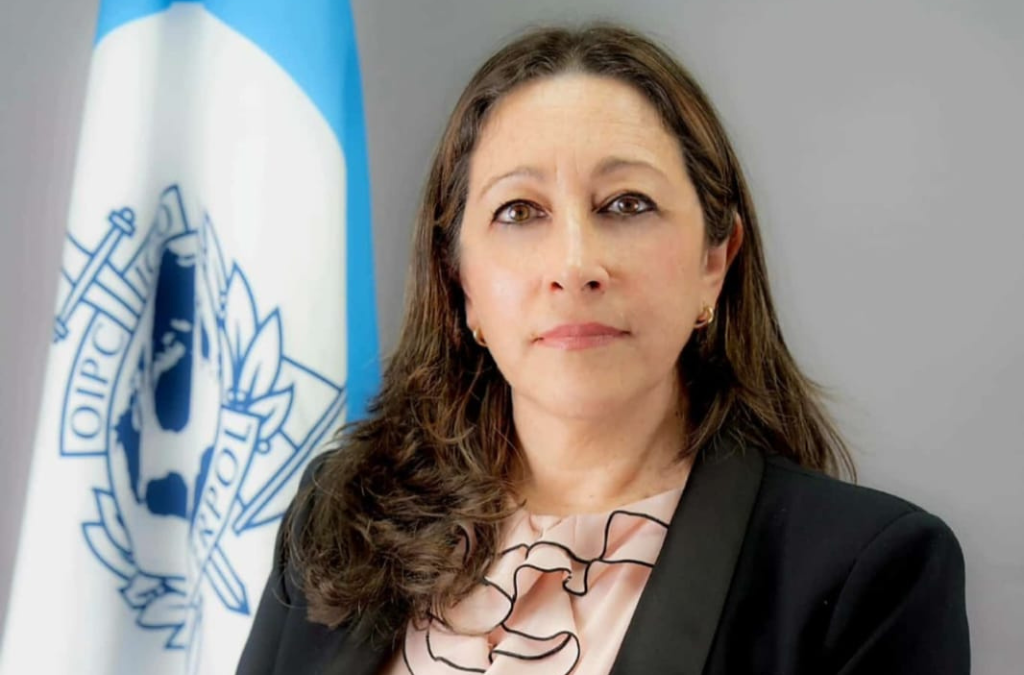
INTERPOL Spotlight: What do you see as the main terrorist threats facing the world today?
María Carmen Muñoz González: Above all, terrorism today has many forms. In the 1990s, when I was fighting terrorism in Spain, the world was dealing almost exclusively with highly organized groups, each with their own often sophisticated structures to handle finances, logistics, training, propaganda and so on, and some with a fully-fledged political wing. Today, this model still exists but, alongside it, we increasingly face more disparate and often nebulous forms of terrorism. Many terrorist actors have little or no structure – in fact they have no need for a formalized structure, hierarchy or even training facilities. They use the internet or digital messaging systems to attract, radicalize, recruit, train, send instructions or trigger attacks, increasingly targeting children and young people as recruits.
And, as well as the more or less extreme political and religious ideologies that continue to drive many terrorist actions, we have seen the emergence of new actors driven by hate, misogyny or even violence for its own sake, with no stated or permanent ideological purpose.
Today’s global instability and the challenges to the multilateral model that has underpinned geopolitics for over half a century are also an important factor in emerging terrorist threats, with major conflicts in two globally strategic regions and many more localized hostilities ongoing. These are scenarios that are likely to lead to more radicalization and polarization and, with firearms and other weapons and equipment readily available, we may see new terrorist threats emerging in post-war situations.
INTERPOL Spotlight: How is INTERPOL uniquely placed to meet these challenges?
María Carmen Muñoz González: In today’s increasingly polarized context, INTERPOL is one of only a few major organizations able to continue championing the multilateral cooperation that is essential to fighting terrorism. We are global and we are also resolutely neutral and that is one of our fundamental strengths. We can bring opposing countries together in the same room - in our General Assemblies or in subject-specific meetings - where they speak to each other with respect. Years of armed or political conflict lead to enormous loss of information, as well as trust, yet countries that have no official contacts can keep bridges open through the neutrality of INTERPOL.
The men and women that make up our specialist counter terrorism teams are another of our greatest strengths, along with the global network of expertise in the law enforcement agencies in our 196 member countries, including the national INTERPOL bureaus in each one of them. No other police organization is able to leverage such expertise right across the world, wherever terrorists are active. We also have the systems, databases and tools to ensure rapid and secure communication across that network.
And at INTERPOL, we recognize the growth in poly-criminality. Terrorist groups and criminal networks active in drug trafficking, fraud or crimes against children procure the fake documents or firearms they need in the same illicit markets and use the same physical and digital trafficking routes. They may even be part of the same organization. Our counter-terrorism teams are able to collaborate closely with our colleagues specializing in other crime areas to share intelligence, crosscheck databases and support each other’s work. We have also instigated regional working groups bringing our own experts together with the heads of counter-terrorism units in member countries to share best practices and operational successes.
I often say that if INTERPOL can’t do it, nobody can. That’s thanks to our neutrality, our network, our systems and our reputation. We cannot make laws, but we can open doors and influence those who do. And all of that is underpinned by trust in the INTERPOL name and brand the world over.
INTERPOL Spotlight: As a female leader in counter-terrorism, what is your message to women working in or considering a career in law enforcement?
María Carmen Muñoz González: My main message to them is that it’s a great career choice and they should fight for what they want. They can be what they want to be.
Women don’t want to be handed success or leadership on a plate. We don’t want to be given positions because we are women. We want to have the opportunities to prove that we are the right person for the job. The same opportunities that are offered to men.
And I also have a message for leaders already in place and their organizations, whether in law enforcement or other fields. Having women in your teams multiplies your successes. So does having people from different regions or different cultures. Diversity doesn’t just add to your success, it multiplies it.
Our counter-terrorism directorate here at INTERPOL has a senior leadership team made up only of women and includes people from over thirty nationalities. I believe that having so many cultures bringing their own experience, background and insights to the work we do together is another one of our fundamental strengths.