





The World Customs Organization and INTERPOL have been trusted partners for almost thirty years. It’s a partnership at the frontline of the fight against transnational crime, combining the unique capabilities and expertise of two global law enforcement leaders. INTERPOL Spotlight speaks to WCO Secretary General Ian Saunders to learn more.
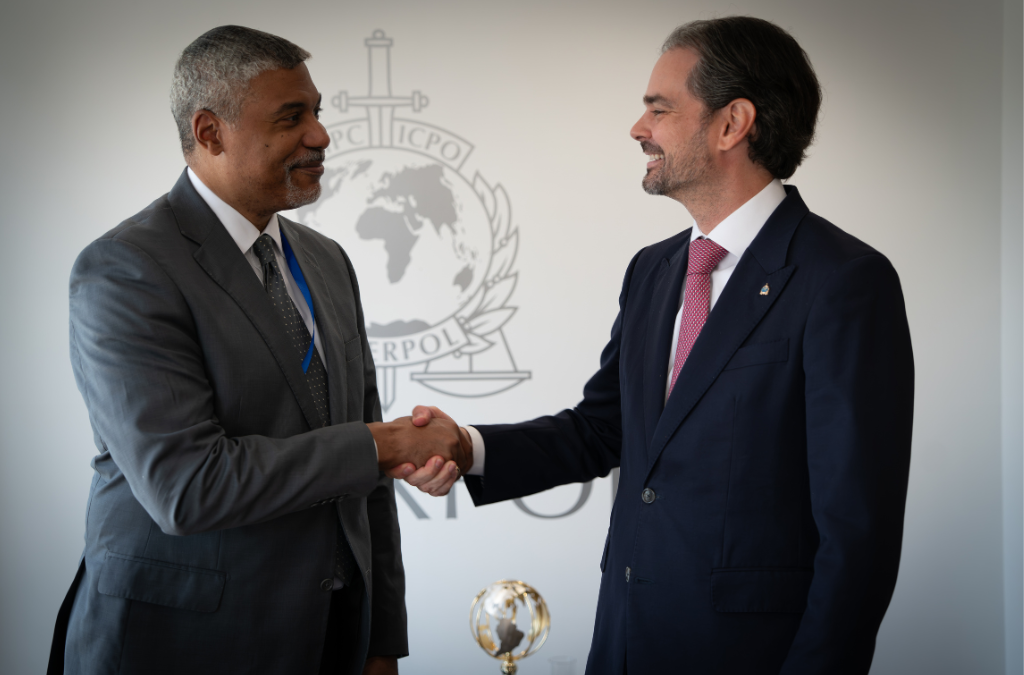
INTERPOL Spotlight: What makes the INTERPOL-WCO relationship effective in successfully combatting transnational crime and strengthening global security?
Secretary General Ian Saunders: The combined authority and expertise of the World Customs Organization and INTERPOL offer the best defense against the complex and numerous threats of transnational crime. These demand concerted and deep cooperation and this is why our partnership is so valuable. The WCO and customs administrations focus on trade-related risks, inspections of shipments and the detection of illicit consignments, while INTERPOL and police authorities bring criminal intelligence, investigative capabilities, global tools and databases, and the ability to identify and dismantle criminal networks.
When these capabilities are connected, fragmented responses can be transformed into unified and more effective actions that protect society. As the global security environment evolves and criminals become more sophisticated, the work of customs and police officers becomes more challenging, and the need for their closer cooperation becomes even greater.
INTERPOL Spotlight: How does WCO engage with INTERPOL both operationally and strategically?
Ian Saunders: Operational cooperation delivers immediate results. It helps customs and police officers work from a shared operational picture: exchanging information, deconflicting targets, identifying suspects, seizing illicit goods and disrupting criminal activity. Operations such as Thunder, combating wildlife crime worldwide, show the practical value of combining customs’ ability to detect illicit consignments with police capacity to investigate and dismantle criminal networks. In another example, in counter-terrorism, Operation Neptune brings together customs, police and border authorities to strengthen controls at maritime, air and land borders. These operations have enabled checks against INTERPOL databases and improved information exchange on terrorism-related risks and cross-border criminal activity. In 2025, the operation resulted in the arrest of 29 individuals for offences including terrorism, drug trafficking, vehicle theft, crimes against children, sexual violence, fraud and human trafficking, and led to the seizure of large amounts of illegal drugs and tobacco products, as well as vehicles, firearms and cash.
But our engagement goes beyond operational collaboration alone. Strategic engagement ensures that lessons from the field are translated into better planning, stronger capacities and more coherent international responses. It allows immediate enforcement results to become repeatable and scalable. It builds capability for member countries, through access to networks, standards, and targeted support. A goal the WCO and INTERPOL share is the establishment of sustainable national cooperation mechanisms that can enable more consistently successful local enforcement – even when neither of our organizations is directly involved.
INTERPOL Spotlight: What are some of the key trends and developments that you expect to impact our work together in the coming years?
Ian Saunders: We are seeing increasingly integrated criminal networks operating across borders and combining multiple crimes, including the growth of global polycriminality across different regions and criminal markets. And, as much as technology is reshaping enforcement approaches for both customs and police, it is being used to enhance criminal methods. On our side, real-time data sharing, risk analysis and predictive tools can enhance detection and enforcement even in the context of seismic shifts in trade caused by e-commerce. We see in in many cases that money now moves faster than goods, something which creates significant concern and challenges for customs and police where money is linked to illegal activity.
These trends underscore the importance of joint, intelligence-driven enforcement and coordinated operational planning. Shared standards, interoperable platforms, capacity-building for officers, and stronger alignment of priorities and operational timelines between the WCO and INTERPOL will be essential if we are to keep pace with criminals that exploit cross-border movements.
INTERPOL Spotlight: What message would you send to international decision-makers on the importance of supporting global law enforcement actors in maintaining global security?
Ian Saunders: Customs and police are at the forefront of maintaining global security, but their effectiveness depends on the support they receive. Organizations such as the WCO and INTERPOL enable national authorities to participate effectively in transnational enforcement and to maximize our impact, international decision-makers should ensure that global law enforcement actors are properly funded and empowered. This means predictable funding, interoperable systems, legal access to relevant data, skilled personnel and cross-border coordination. Simply put, we need leaders to help provide the tools and resources to do the job that’s needed.
When adequately supported, global law enforcement actors like the WCO and INTERPOL are best positioned to coordinate multi-stakeholder operations, dismantle criminal networks and deliver measurable enforcement outcomes on the ground. Supporting customs and police cooperation is an unquestionably worthwhile investment in global security, more resilient supply chains, and sustainable development.