




INTERPOL supports its member countries in dismantling the criminal networks behind environmental crime through specialized expertise, coordinated operations, and robust intelligence and information-sharing capabilities. With a global presence and operational reach, INTERPOL identifies environmental crime hotspots, respond to regional challenges, and provide targeted analytical and investigative support where it is needed most.
The Environmental Security Unit addresses five key environmental crime areas: wildlife crime, pollution crime, fisheries-related crime, forestry crime, and illegal mining. By bringing together law enforcement agencies from member countries, international organizations, civil society, and the private sector, it drives coordinated action to prevent, detect, and disrupt environmental crime worldwide.
National Environmental Security Task Forces
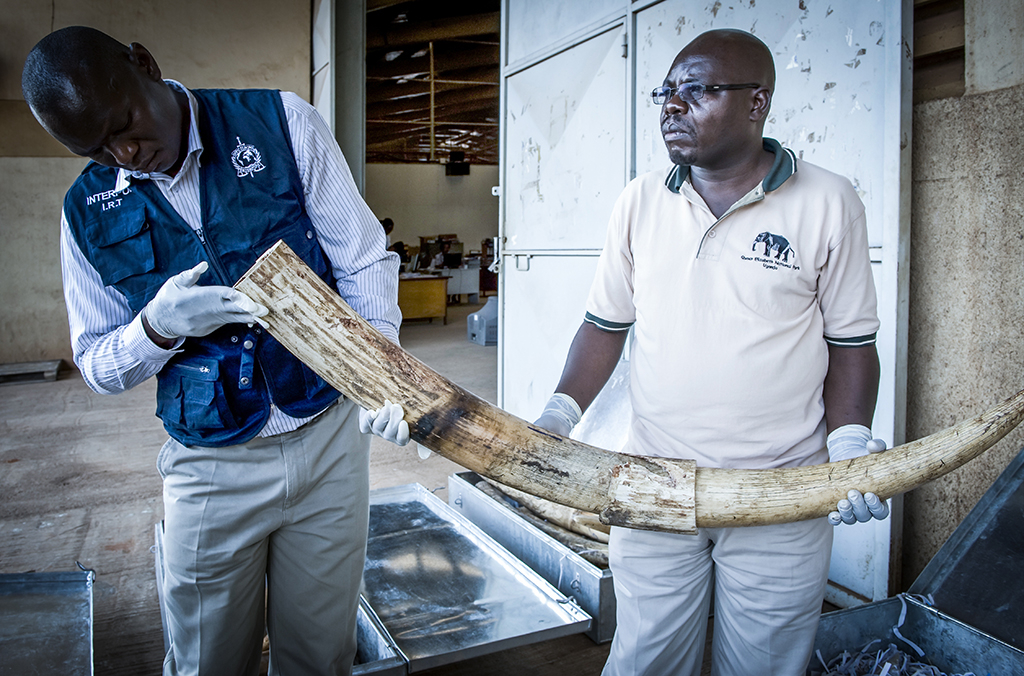
A National Environmental Security Task Force (NEST) allows law enforcement to stand alongside scientific experts whose knowledge and access to resources are invaluable in the fight against environmental criminals. It brings together police, customs, environmental agencies, prosecutors, non-governmental organizations and intergovernmental partners to focus on the networks and crimes that particularly affect a country.
A NEST draws on the mandates of each agency involved to combat environmental crimes from all angles – from on-the-ground illegal poaching to investigations into the financial and tax affairs of criminal networks. NESTs can be derived from or contributed to by other task forces which already exist in the country. INTERPOL has developed a guide to assist member countries in setting up a NEST.
Capacity building
The INTERPOL Environmental Security Unit strengthens member countries’ capacity to combat environmental crime through targeted training and capacity-building programmes. Activities delivered across Africa, the Americas and Asia have enhanced law enforcement capabilities and supported successful operational outcomes.
Analytical Support
INTERPOL also provides intelligence and analytical support to guide enforcement action. Drawing on information from member countries, partners and other sources, this support includes criminal network analysis, digital forensics, image and biometric analysis, movement tracking of vessels, vehicles and individuals, and the identification of links, trends and patterns that help disrupt environmental crime networks.
The Illicit Market Analysis File is a database that holds criminal intelligence specifically related to transnational organized crime in the field of environmental crimes, illicit goods and global health issues. More than 137 member countries participate in this Analysis file.
Regional Investigative and Analytical Case Meetings
INTERPOL facilitates Regional Investigative and Analytical Case Meetings to support cross-border cooperation on environmental crime investigations. These meetings bring together investigators from different countries to exchange information, identify links between cases, and agree on operational priorities and targets.
By combining national and regional expertise, intelligence, and operational insights, the meetings help uncover connections between criminal activities, trade routes, border hotspots, and emerging threats. Information and intelligence provided by member countries are analysed to identify common targets and support coordinated enforcement action.
INTERPOL also coordinates dedicated international task forces that bring together law enforcement agencies to target transnational criminal networks involved in the illegal trade of environmentally sensitive commodities, including wildlife, fish, timber, minerals and waste.

INTERPOL Notices
INTERPOL Notices alert member countries and share information on environmental crimes. INTERPOL uses Red Notices to locate wanted environmental criminals, Blue Notices to collect information on suspects, Purple Notices to share information on new modus operandi, and Green Notices to provide warnings and intelligence about environmental criminals likely to repeat their crimes in other countries.
Operational Support Teams
At the request of member countries, INTERPOL deploys Operational Support Teams (OSTs) to assist ongoing environmental crime investigations. These teams combine forensic, analytical and technical expertise to support national law enforcement authorities. Support may include tracing illicit gold supply chains, analysing criminal networks, examining digital evidence, mapping trafficking routes, and coordinating intelligence across borders to identify suspects and disrupt transnational environmental crime networks.
Transnational Operations
INTERPOL leads coordinated, multi-jurisdictional operations at the global and regional levels to support law enforcement agencies in detecting, disrupting, and dismantling criminal networks involved in all forms of environmental crime. To ensure operations are fully effective and to empower member countries throughout the entire investigative cycle — from strategic planning and intelligence gathering to evidence collection and prosecution — at the request of member countries ENS provides targeted capacity-building training in advance and operational and forensic support afterwards. These efforts are designed to strengthen cross-border collaboration and enhance the use of advanced technologies to combat environmental crime.
Actualités associées


Réseaux sociaux
