





The forensic scientists tracking illegal gold in the Amazon
Today’s record gold prices are a magnet for organized crime and illegal mines have proliferated in remote Amazon regions, including in protected indigenous territories.
But cutting-edge technology, and the expertise of forensic geologists in Brazil’s Federal Police and INTERPOL, can now reveal the unique ‘DNA’ of seized gold and pinpoint its origin.

This January, international gold prices hit a record high of over USD 5,500 per troy ounce or more than USD 176,000 per kilogramme. The latest price surge follows an upward trend that began during the Covid-19 pandemic in 2019 . Seen as a safe haven for investors, the precious metal has also become highly desirable for organized crime groups, including in Brazil where, since 2023, police have destroyed thousands of illegal gold mines in the protected Yanomami indigenous territory in the northern Amazon.
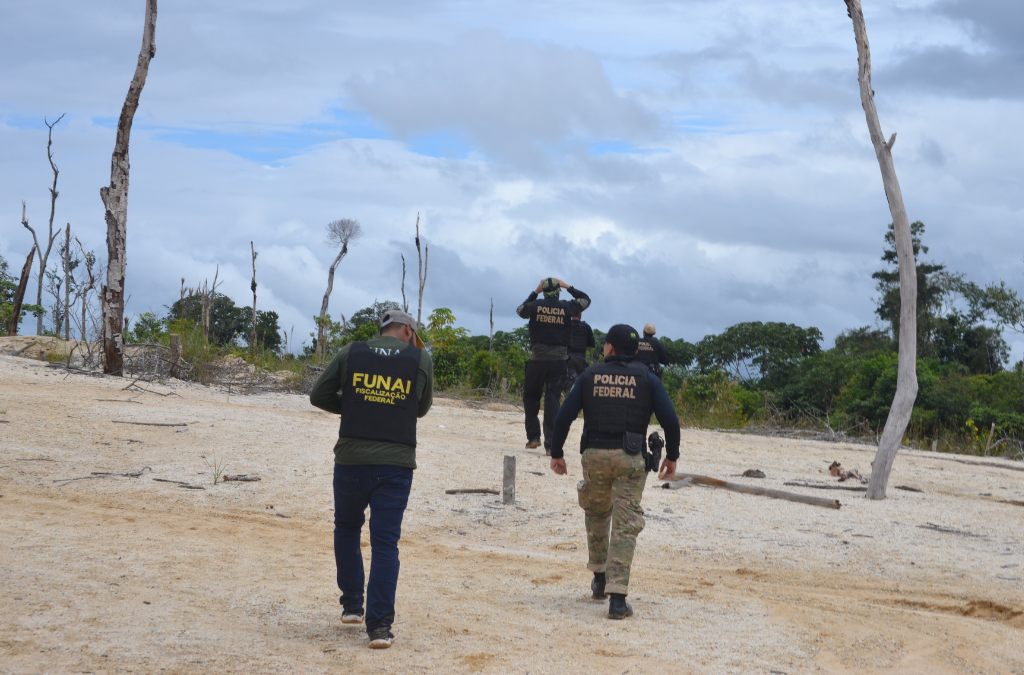
“Illegal gold mining often uses mercury and cyanide which are highly toxic for both the environment and human health”, says Erich Moreira Lima, the Brazilian Federal Police’s Head of Forensic Geology. “Recent years have seen a sharp rise in the amount of gold on the Brazilian market, reaching around 85 tons a year, and about 25 per cent of that is likely mined from illegal sites.”
Identifying gold’s ‘DNA’
Against this backdrop, in 2019, Moreira Lima and his colleagues launched the Clean Gold Programme, creating a database that now contains over a thousand samples of different types of gold from across the Brazilian and French Amazon.
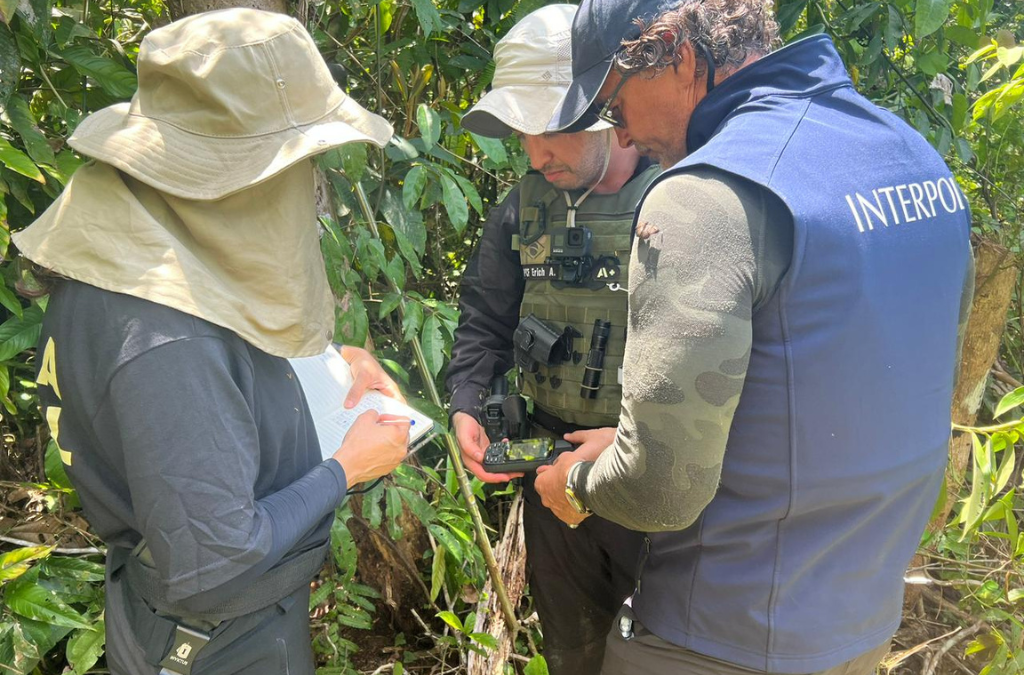
The precious metal comes in many forms, such as tiny alluvial grains or gold sponge, and, before refining, contains impurities such as silver, mercury and lead. The database catalogues each sample’s morphological signature – as unique as a fingerprint or DNA – and compares them with gold seized by police to determine where it is from and whether it is legal. “Criminals often melt and refine illegal gold into bullion and claim it comes from a legitimate source”, says Erich Moreira Lima. “Until recently, that made it impossible to detect the gold’s true origin, but the forensic techniques we use in our laboratory allow us to separate out and identify the different elements of seized gold, whether refined or unprocessed”.
Innovating in forensic geology
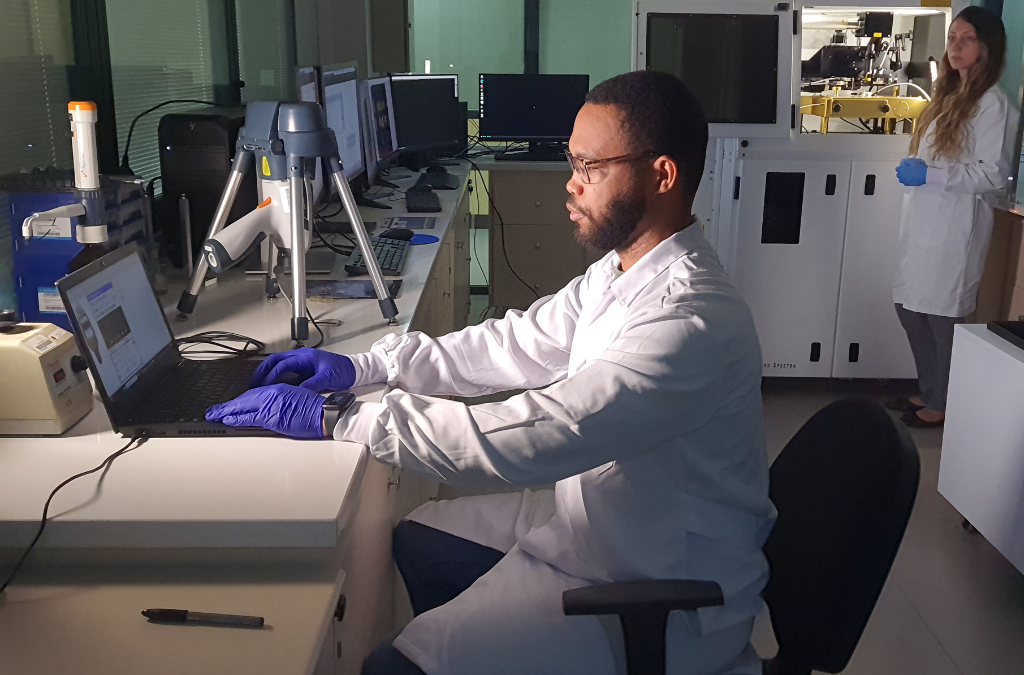
Thanks to support from INTERPOL (via the German Environment Ministry's International Climate Initiative (IKI) and Brazil’s Amazon Fund, the Clean Gold Programme has created the world’s first law enforcement laboratory with both the expertise and the equipment to carry out geochemical analysis of gold and the impurities it contains. One major innovation used by its geochemists is inductively coupled plasma mass spectrometry, or ICP-MS, an analytical technique that can measure elements at trace levels.
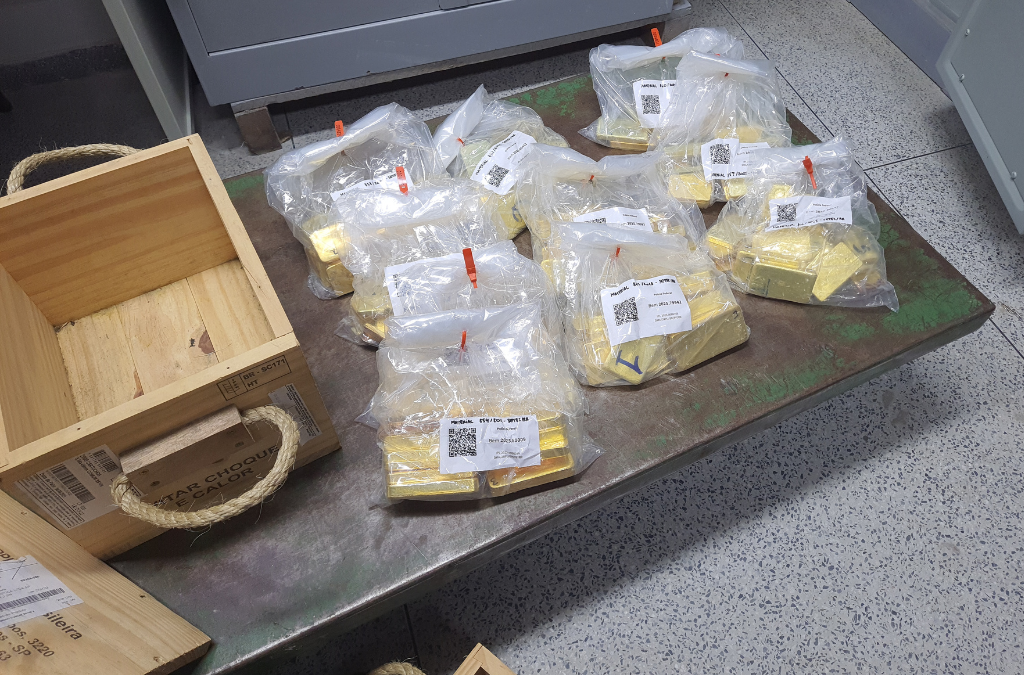
“ICP-MS makes it possible to separate tiny particles of lead from the gold in any form and analyse its isotopes, the chemical markers that make each piece of lead unique”, explains Ricardo Moraes, Criminal Intelligence Officer with INTERPOL’s Environmental Security Unit and previously one of the Brazilian Federal Police officers behind the Programme. “The isotopic composition of lead, resulting from radioactive decay processes, provides a distinct 'fingerprint.' By analyzing these isotopes in gold samples, laboratories can determine the geological age of the ore deposit and trace its geographical origin”.
The criminal shift from drugs to gold
INTERPOL’s Environmental Security unit has supported the Programme by facilitating the mentoring of forensic experts on the use of this cutting-edge laboratory equipment and on sampling operations in the Yanomami indigenous territory.
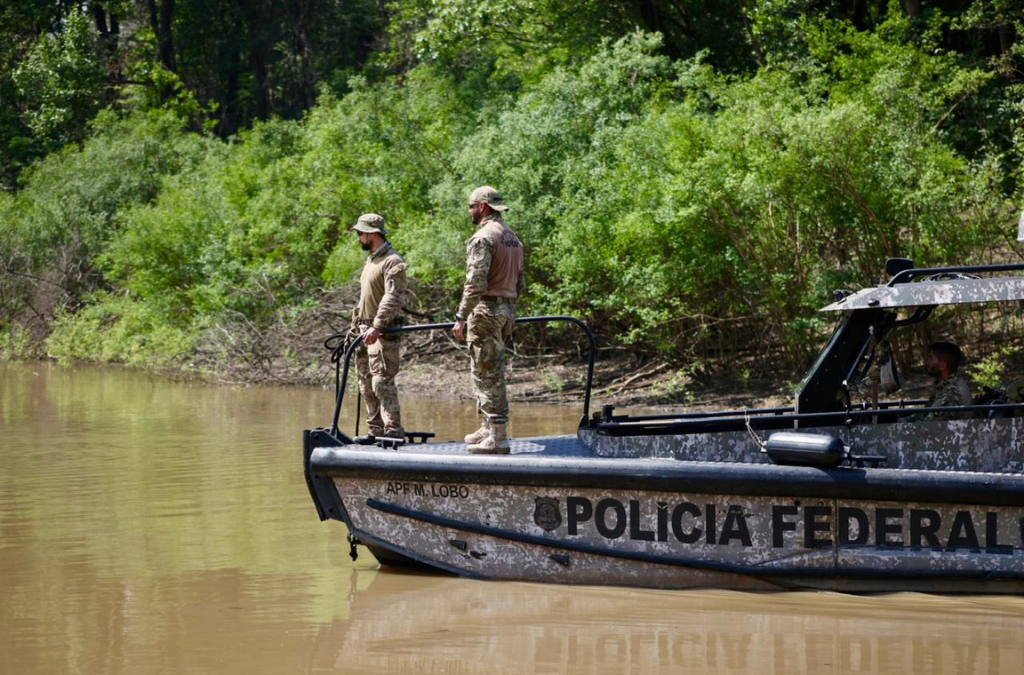
In the first such operation coordinated by the Amazon International Police Cooperation Centre (CCPI Amazônia) INTERPOL worked with police from Brazil, Bolivia, Colombia, Guyana, Peru and Suriname, disabling 277 dredges used in illegal gold extraction and uncovering crucial intelligence on the financial and logistics networks behind illegal mining. “We know that major Brazilian organized crime groups such as Red Command and PCC increasingly see illegally mined gold as an attractive alternative to drugs”, says Ricardo Moraes. “Unlike narcotics, there is a thriving legal market for gold, which also now commands much higher prices, as well as being easier to carry and conceal”.
Investigating transnational cases
Whether they are trafficking drugs, protected wildlife species or gold, the criminal networks active in Latin America stretch beyond borders and INTERPOL is also supporting police forces beyond Brazil in identifying illegal gold. In late 2025, authorities at Paraguay’s main airport in Asuncion seized 22 kilogrammes of gold, headed for Panama. They reached out to their Brazilian colleagues in the Clean Gold Programme, who in turn contacted INTERPOL, for their help. “Paraguay has only one gold mine,” says Erich Moreira Lima, “so we have been working with INTERPOL to bring samples from ore extracted there back to our laboratory for analysis. If they don’t match, we will know the gold has come from outside Paraguay and the next step will be looking for matches with our reference samples so we can determine which country it comes from and confirm that it was illegally mined”.
Extending Clean Gold beyond borders
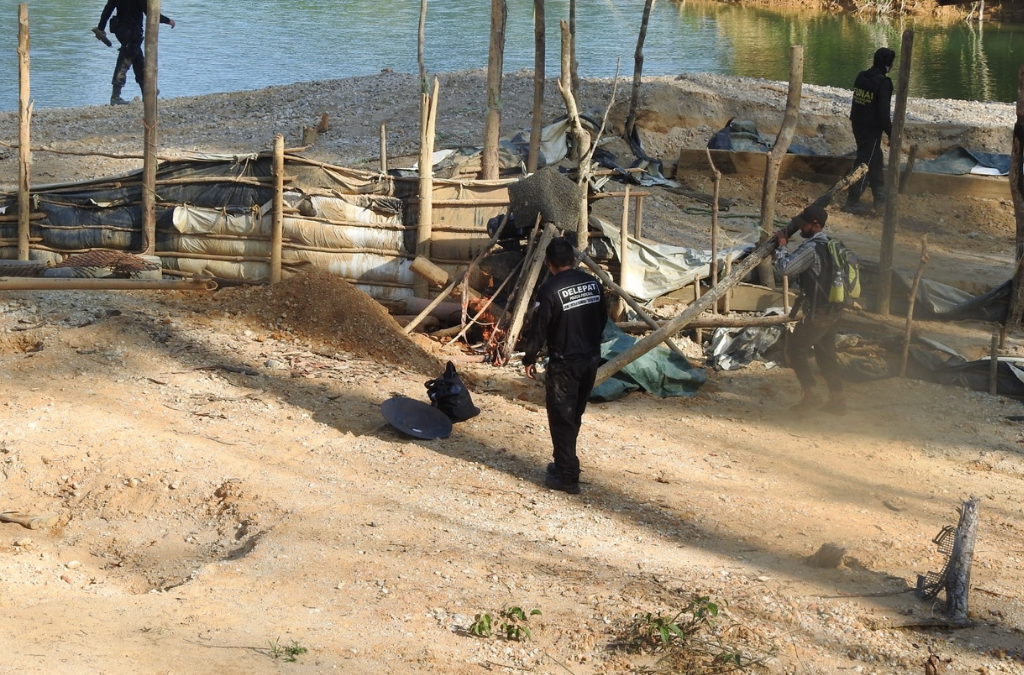
The Clean Gold Programme expects the Paraguay seizure to be one of many cross-border cases, and the team plans to make its database regional and even global. “Countries throughout Amazonia face the same damage from illegal mining as Brazil and we need to stand together to combat the criminals operating in the region”, says Erich Moreira Lima. “We plan to extend the database to Colombia, Ecuador, Peru and Suriname in the months ahead”, he continues, “and in the longer term, we hope to bring our forensic approach to other gold-producing regions like Africa and to the international markets where gold is traded. INTERPOL’s global network and expertise will be crucial in achieving that”.