




TOLÈDE (Espagne) - L’Europe fait face à des défis de taille, comme les filières de trafic de stupéfiants qui relient l’Amérique latine et les ports européens, les opérations de fraude ciblant des victimes sur d’autres continents et l’infiltration de groupes criminels dans des sociétés légitimes.
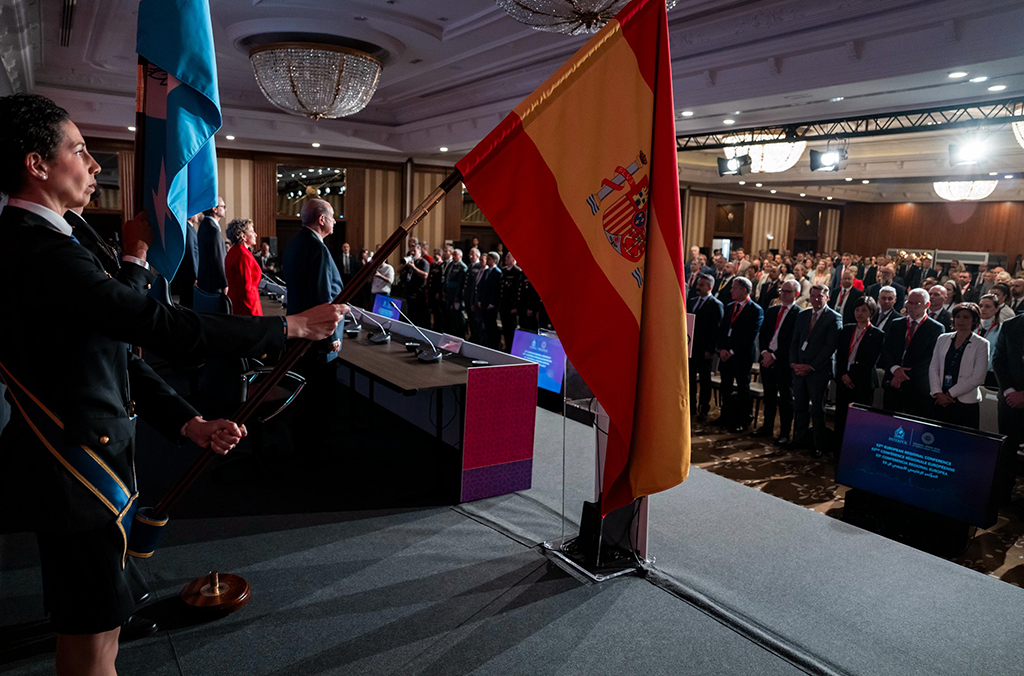
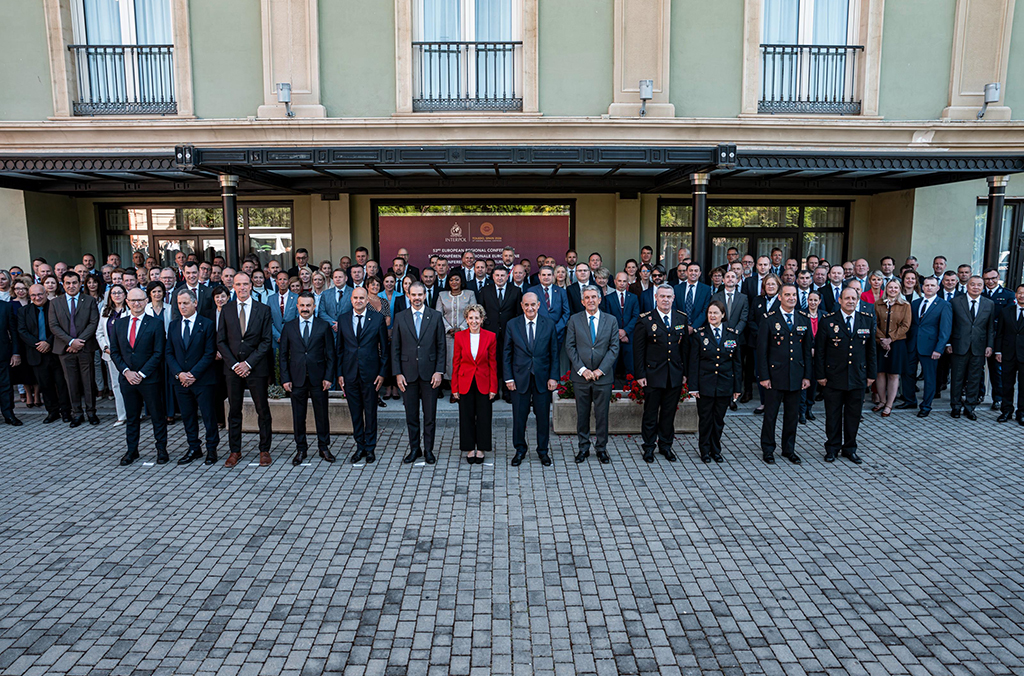
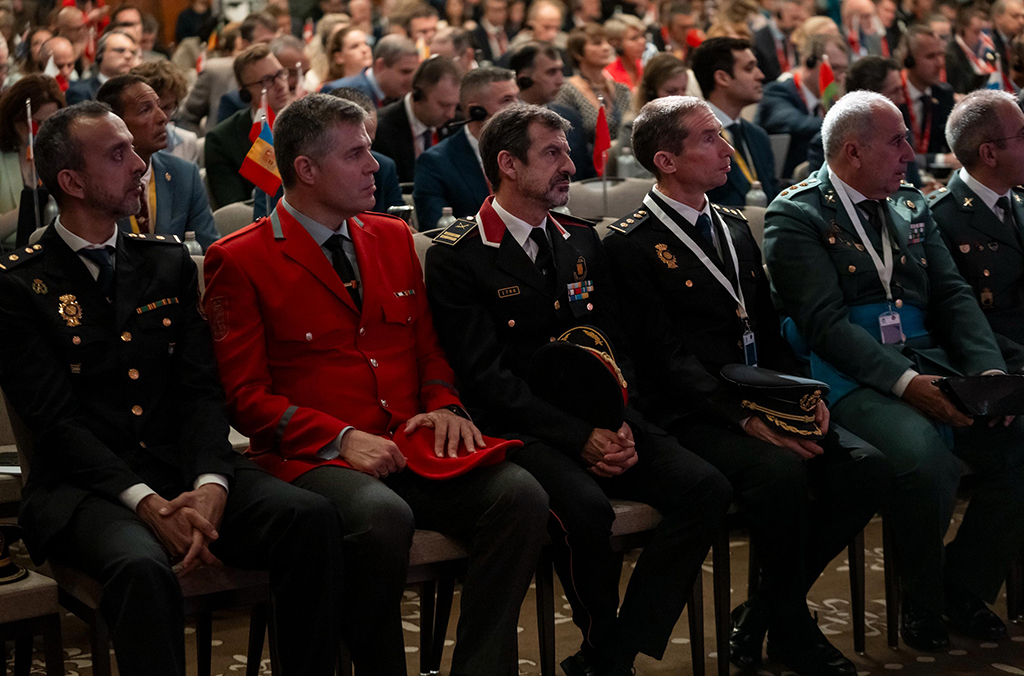
Afin d’examiner ces menaces et d’autres formes de criminalité, la Conférence régionale européenne réunit plus de 140 hauts responsables de la police d’Europe et d’ailleurs.
Pendant deux jours (20 et 21 mai), les délégués analyseront la manière dont les réseaux criminels tirent parti des plateformes numériques, générant des écosystèmes de « criminalité en tant que service » et des centres d’escroquerie à échelle industrielle, lesquels constituent une menace grandissante en facilitant les fraudes et infractions financières d’une ampleur sans précédent.
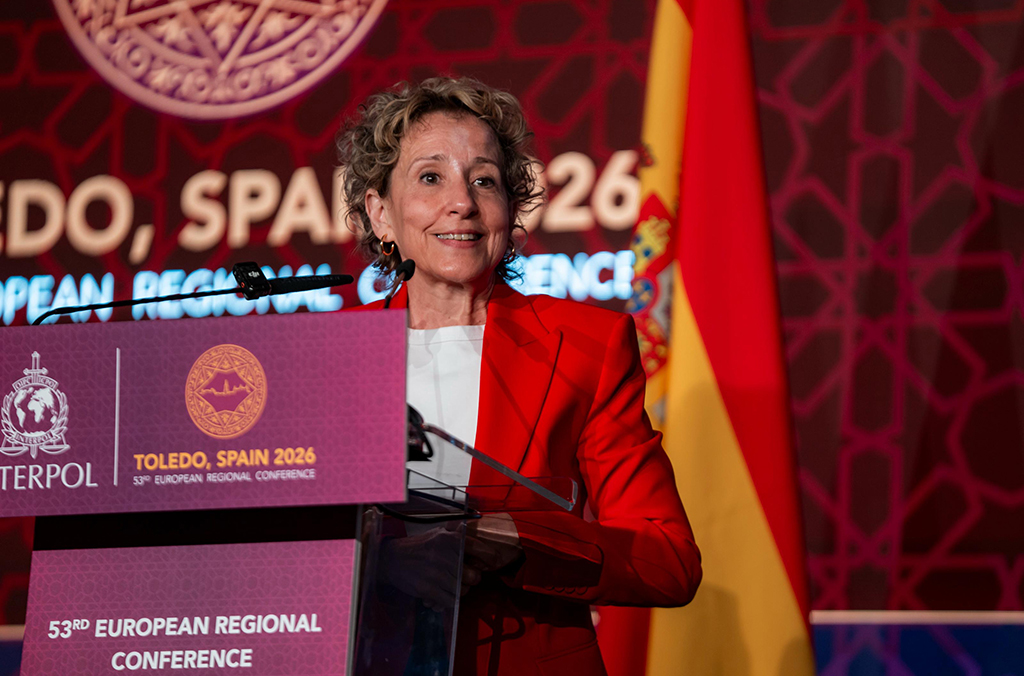
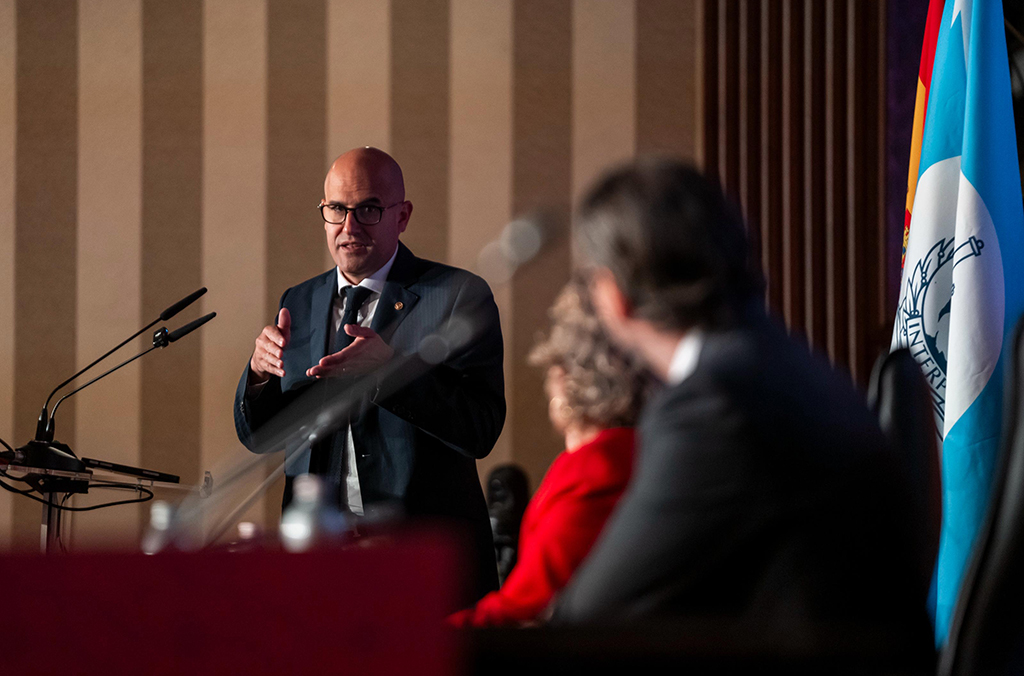
Mme Aina Calvo Sastre, secrétaire d’État espagnole à la Sécurité, a déclaré :
« C'est un grand honneur d’accueillir cet événement en Espagne, pays qui met en avant la coopération policière internationale et reconnait la valeur stratégique d’INTERPOL et des professionnels qui, par leur travail quotidien, contribuent à la sécurité de millions de personnes.
« Dans un contexte où la mondialisation a créé de nouvelles opportunités pour la criminalité transnationale, il est essentiel de renforcer la coopération bilatérale et multilatérale pour lutter contre les menaces communes telles que la cybercriminalité, le trafic de stupéfiants, les réseaux d’immigration irrégulière et la criminalité à caractère haineux. »
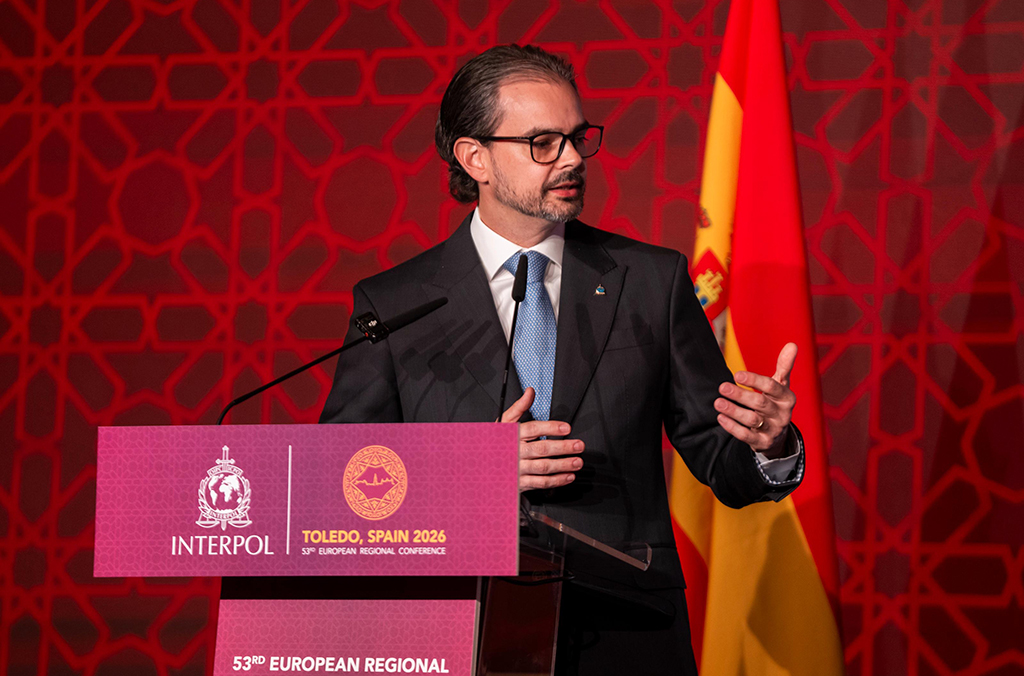
Le président d’INTERPOL, M. Lucas Philippe, a indiqué :
« La force d’INTERPOL réside dans sa capacité à traduire différents systèmes et perspectives dans un langage opérationnel commun au service de l’action policière mondiale.
« Ces deux jours ne doivent pas constituer un simple exercice de diagnostic. Ils doivent constituer un espace d’action dans lequel nous consolidons nos réflexes de coopération et renforçons le langage opérationnel commun qui est la véritable force d’INTERPOL depuis plus d’un siècle. »
La criminalité sans frontières et les menaces invisibles
INTERPOL Secretary General Valdecy Urquiza said:
“Today, the most dangerous criminal infrastructure is borderless and invisible, operating from anywhere in the world, day or night.
“International crime has local consequences, and we see how national and regional policing is strongest when amplified by global intelligence, capabilities and connectivity. And here, Europe leads by example, turning international police cooperation into operational results.”
Trafic de stupéfiants et flux financiers illicites
La Conférence abordera les évolutions du trafic de stupéfiants en Europe, comme les changements d’itinéraires et l’utilisation accrue des routes maritimes en haute mer par les groupes criminels organisés.
Les délégués recevront des mises à jour sur les outils tels que le mécanisme mondial d’INTERPOL pour le blocage rapide des paiements (I-GRIP) et les notices argent, lesquelles assistent les pays membres dans le recensement, le traçage et la récupération d’avoirs liés aux activités criminelles.
Ces deux jours permettront également d’explorer de nouvelles réponses opérationnelles permettant de détecter et de démanteler les réseaux de traite d’êtres humains.
La coopération internationale permet d'élucider une affaire non résolue depuis 25 ans
l’identification d’une jeune fille de 16 ans dont le corps avait été découvert dans le Main, à Francfort (Allemagne) en 2001.
Cette affaire marque la sixième identification réalisée dans le cadre de la campagne internationale « Identify Me » coordonnée par INTERPOL en partenariat avec les autorités de l’Allemagne, de la Belgique, de l’Espagne, de la France, de l’Italie et des Pays-Bas.
L’initiative vise à identifier 47 femmes dont les corps ont été retrouvés en Europe au cours des dernières décennies et à faire avancer les enquêtes sur les circonstances entourant leur décès.