





At the heart of INTERPOL’s Global Complex for Innovation in Singapore, our Innovation Centre spearheads our work to investigate, understand and leverage the key technologies impacting global security. Today, its three priority areas are digital forensics as a critical investigative enabler, the rising threat and policing potential of drones and the fast-changing challenges of artificial intelligence and synthetic media. As a knowledge hub connecting law enforcement agencies, academia and the private sector worldwide, the Centre builds and shares expertise to counter these technology-enabled threats and more, giving law enforcement the tools they need to keep pace as they evolve.
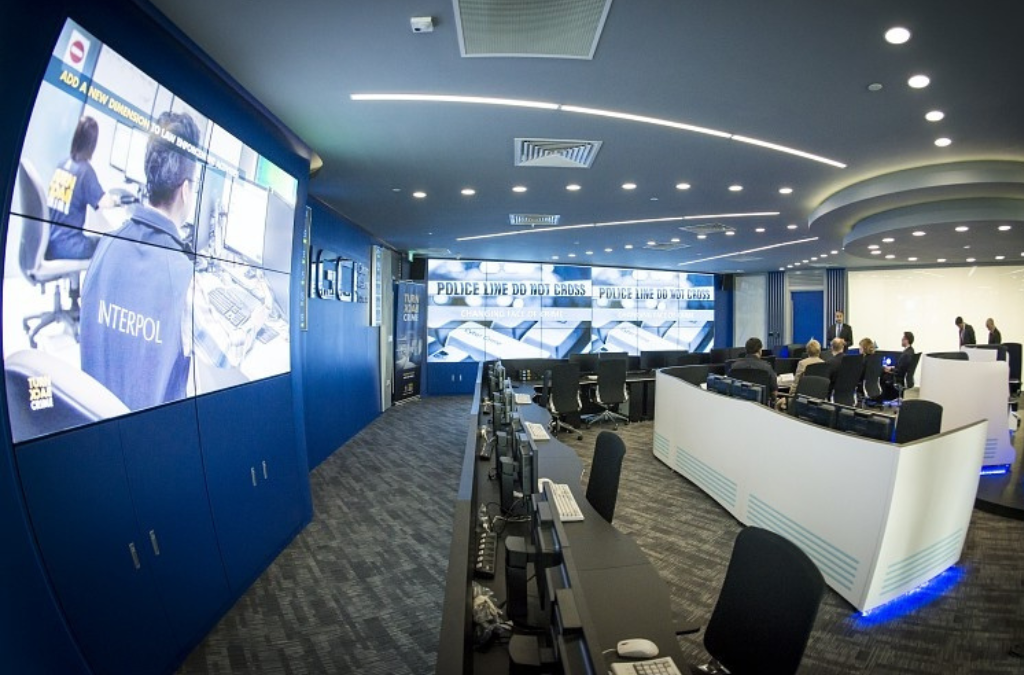
AI-generated deepfakes, drones that can deliver bombs or transport drugs, encrypted messages concealing the whereabouts of illegal assets. These are just a few examples from the ever-growing array of technological tools and weapons now available to transnational organized crime groups. They also reflect the technologies identified by the INTERPOL Innovation Centre as priority areas in its work to develop novel solutions to both counter the threats they pose and leverage the benefits they offer. “At INTERPOL, innovation is not about building devices or technologies from scratch”, says Toshinobu Yasuhira, Director of the INTERPOL Innovation Centre. “We connect internal and external experts from law enforcement, as well as academic and private partners”, he continues, “pooling their knowledge and experience of critical innovations to identify challenges, exchange knowledge, and co-create real-world solutions that meet the current and future needs of law enforcement across the world”.
A data goldmine
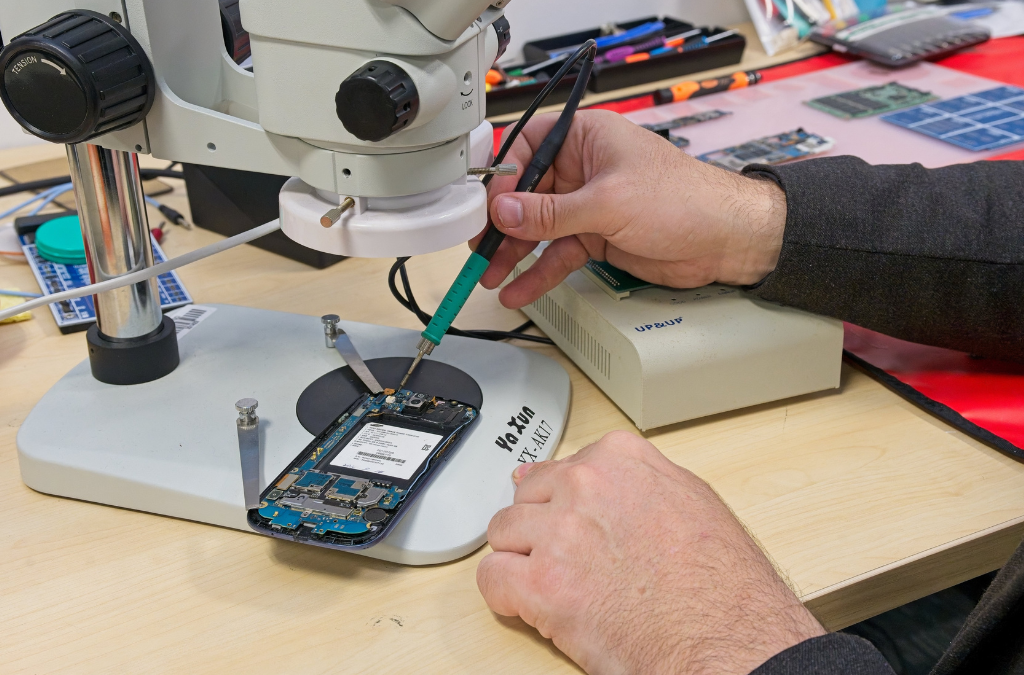
In 2026, the Innovation Centre’s focus is on three priority areas at the intersection of emerging technologies and policing: digital forensics, drone technologies and the constantly evolving risks posed by artificial intelligence and synthetic media. Digital forensics involves retrieving and analysing electronic data – and potential evidence – from devices such as computers, smartphones and cars. In recent years, it has become a fundamental part of police investigations and INTERPOL, with its own Digital Forensic Lab, based in the Innovation Centre, has extensive expertise in the field. One specific area is the rapidly evolving field of Unmanned Aerial Vehicles, or drones. “The first concern after a malicious or unauthorized drone sighting is to bring the drone down and neutralize it, but officers too often see that as an end in itself”, says Christopher Church, Senior Mobile Forensics Specialist, INTERPOL Innovation Centre. “Like other electronic devices, drones are full of data, including flight paths and takeoff location, for example, photos and videos, or signals sent between the drone and its controller”, he explains, “and we offer member countries forensics training on how to extract and analyse that data and use it in their investigations”.
Drones as first responders

The Innovation Centre also works with law enforcement agencies and other partners globally both to test and enhance drone countermeasure systems , often in highly sensitive locations, and support the use of drones in police operations. In the United States, several hundred law enforcement agencies now deploy Drone First Responder (DFR) programmes and INTERPOL works closely with California’s Chula Vista Police Department, the first in the world to introduce this type of programme in 2018. DFR makes it possible to live stream 9-1-1 calls as they’re happening, with audio from the emergency call and precise, real-time GPS location of the caller, as well as video footage from the drone once it has reached the scene. “DFR increases officer and community safety and reduces police response times”, says Sergeant Manny Salazar, DFR Supervisor, Chula Vista Police Department. “In situations where traditional policing would send officers into potentially dangerous situations, we can now rapidly evaluate the live video to decide on the best strategy. This has been especially helpful when the incident involves persons dealing with a mental health crisis or reported armed persons”, he continues. “The extra moments of valuable intelligence provide a clearer path for de-escalation”.
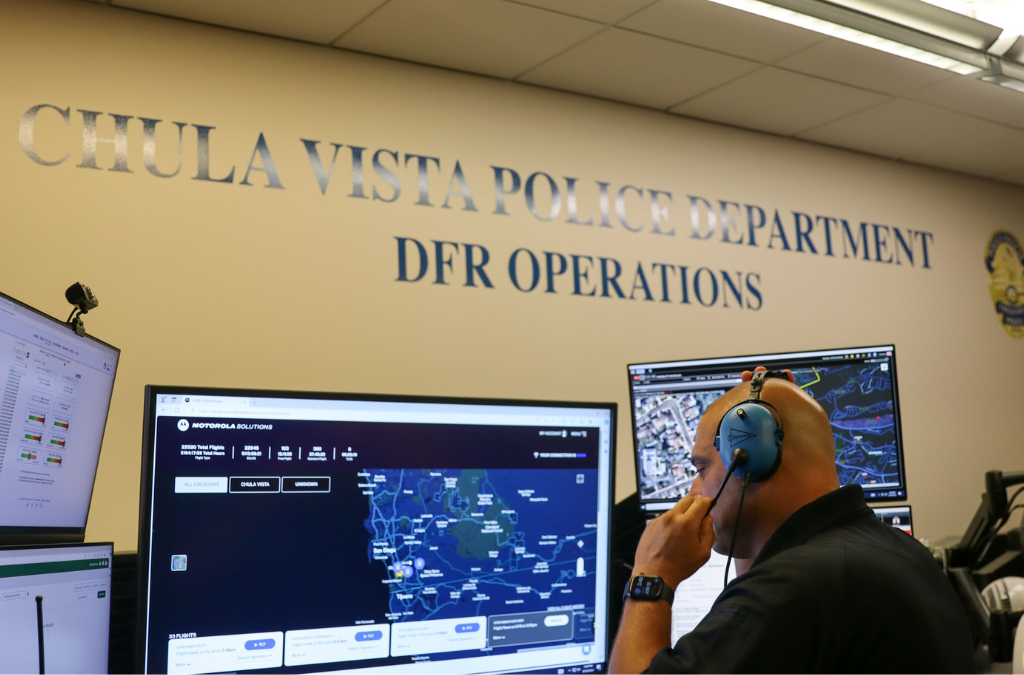
Since Chula Vista introduced DFR, the Department has made 24,000 beyond visual line of sight missions, of which some 20 percent were resolved without the need to deploy a uniformed officer. “This capability has been one of the programme’s most valuable outcomes, freeing up limited police resources for other emergency calls”, adds Sergeant Salazar. “Its greatest impact is reflected in lives saved, incidents successfully de-escalated without the use of force, and the efficient and effective deployment of first responder resources”.
From finding fakes to proving provenance
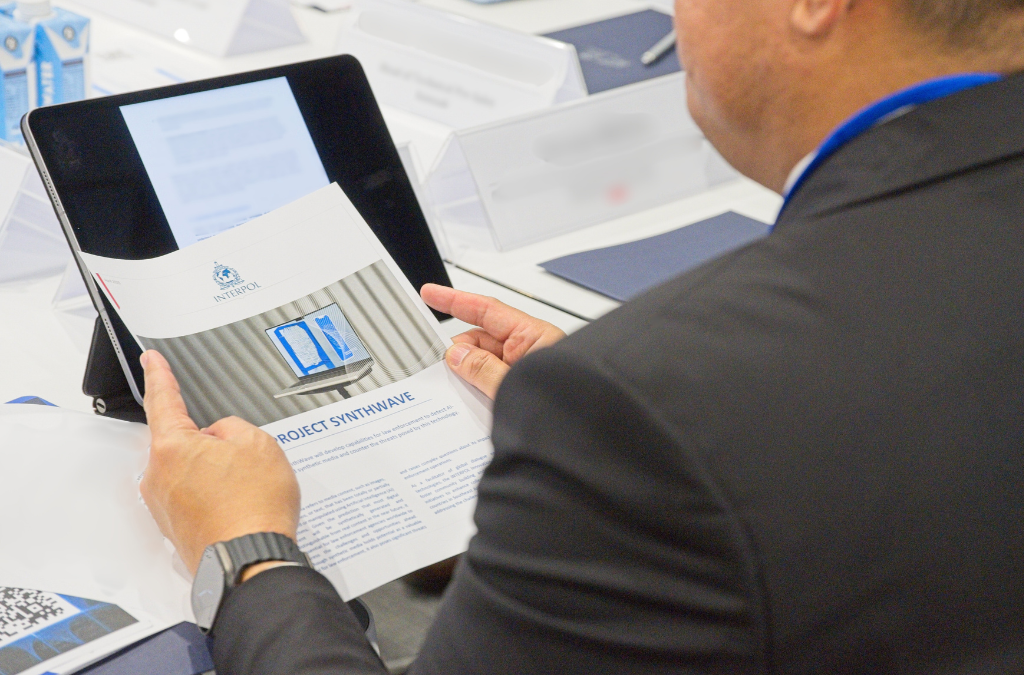
The Innovation Centre’s third priority area is artificial intelligence and, in particular, synthetic media. With their ability to create apparently identical video lookalikes and audio soundalikes, deepfakes have become almost ubiquitous, ranging from harmless memes to imitations of global superstars and political leaders, but also as a new tool for digital crime. The use of deepfakes in online fraud alone led to an estimated USD 12 billion in losses globally in 2024, and that has been forecast to rise to USD 40 billion by 2027. The Innovation Centre works closely with leading international experts to strengthen law enforcement capabilities to detect and respond to deepfakes and other AI-generated synthetic media, within the international, INTERPOL-led initiative, Project Synthwave. Among them are Colin Robinson and Emily Williams of Liverpool John Moores University in the United Kingdom, key collaborators on INTERPOL’s new Guidelines on synthetic media, to be published later this month. The Guidelines aim to support member countries combating criminal use of synthetic media and recognize the significant challenges involved. “The mathematical techniques we use to reveal the specific patterns that occur in real video or audio can also identify imitations, since they show different patterns”, says Colin Robinson, Programme Leader, Applied Forensic Technology Research Group, Liverpool John Moores University. “But with deepfakes increasingly incorporating imperfections to mimic real-world flaws, they are able to bypass both human and AI detection systems”, he continues, “and that means that detectives need to shift from spotting fakes to verifying what is real”.
Provenance matters
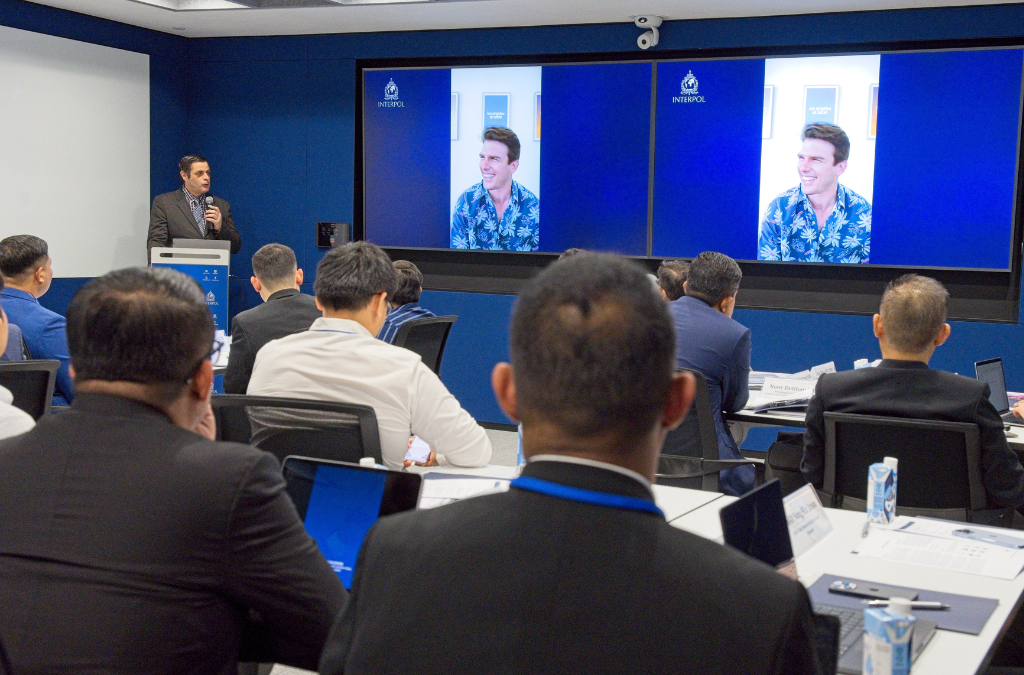
Just like on the art market, provenance of digital audio and video evidence is therefore essential to confirming its authenticity. “Provenance is often overlooked, but it is crucial if a piece of evidence is going to stand up in court”, says Emily Williams, PhD Researcher, Synthetic Media. “It may mean showing the origin or ownership history of a piece of media or the way it has been handled since its creation and, given the way synthetic media is evolving, should be just as carefully handled as a piece of biological evidence.”
Tomorrow’s technologies

Beyond its focus on today’s priorities, the teams at the Innovation Centre are always looking ahead to emerging fields that may hold crime-fighting promise or become the next major threat. One of those areas is quantum technologies, which harness the behaviour of matter and energy at atomic and subatomic scales. They include quantum sensing which can detect physical phenomena with a level of precision far beyond conventional methods. “Quantum sensors could, for instance, detect unauthorized vessels or aircraft by sensing minute changes in their environment”, explains Toshinobu Yasuhira. “As the technology evolves, it could offer substantial law enforcement benefits, by making previously unobservable phenomena observable. It is too early to be sure where this or other emerging fields will take us”, he concludes, “but at the Innovation Centre we stand ready to detect and explore the technologies that will become the priorities of tomorrow”.