




Timeframe: January 2024 to December 2026
Funded by: European Union (Directorate-General for International Partnerships - DG INTPA)
The situation
Organized crime rates in Latin America and the Caribbean continue to be among the highest in the world and have increased following the global pandemic. Transnational organized criminal groups operating in the region demonstrate a high level of sophistication, engaging in a wide range of activities that threaten security, human rights and good governance. The movement of international fugitives evading the rule of law and justice in the region strains not only good governance but also trust in law enforcement and public safety. Launched by the EU in 2017, El PACCTO programme (Europe - Latin America Programme of Assistance against Transnational Organized Crime to promote security and Justice in Latin America. In 2024, it launched INTERPOL support to EL PACCTO 2.0, phase 2 of the project to enhance cooperation between Latin America and the Caribbean, and Europe.
Objectives
- Improved efficiency and effectiveness of cooperation to pursue and locate and arrest high value fugitives in 12 countries in Latin America and the Caribbean (LAC), including those with links to Europe.
- Long term ability for law enforcement to conduct joint fugitive investigations through increased interregional police cooperation and standardized information exchange between law enforcement officers in the region.
- Enhanced best practice working methods in fugitive investigations in the region.
Project activities
Specialized operational and investigative support and capacity building activities focus on identifying the most dangerous fugitives and their associated networks - those responsible for providing them with support and logistics. Project activities are intelligence-led and tailored to all 12 participating countries’ operational needs. Four EU countries are providing assistance (France, Italy, Portugal and Spain). Intelligence-led operations are conducted in the region with a focus on subjects of our Red Notices.
Strengthening the network of fugitive investigators
INTERPOL created a Regional Fugitive Investigative Network (REFINE) during phase 1 and through several INFRA operations performed in the regions. Project 2.0 builds upon this network and brings together law enforcement officers through operational meetings to share experience on fugitives’ identification, localization, tracking and arrest.
Operations and police data exchange
INTERPOL uses an established INFRA (International Fugitive Round-Up and Arrest) operating model to strengthen police capacity to identify, track and arrest fugitives and promote joint operations at the multi-country level.
The Fugitive Investigation Support (FIS) unit has developed a mechanism for law enforcement to standardize, analyze and exchange police data via INTERPOL's I-24/7 police communication system. The aim is to anticipate and identify the movements, travel facilitators and modus operandi of fugitives to facilitate their location and arrest by national law enforcement.
Strengthening investigative techniques
Operational workshops are organized to build the law enforcement capacity of the four new countries (Belize, Dominican Republic, El Salvador, and Jamaica). The workshops focus on specialized fugitive investigation techniques and INTERPOL capabilities for criminal investigations (tools, data exchanges, forensics, cybercrime and criminal intelligence analysis).
Project updates
First operational meeting
The First Project Operational Meeting strengthened the interregional network of fugitive investigators (REFINE). It highlighted certain cases and lay the groundwork for future operational actions. Representatives from 12 participating countries and 3 EU countries exchanged vital intelligence on fugitives' whereabouts and fostered connections and trust. A significant number of high-risk fugitives under INTERPOL Red Notice were identified, paving the way for their potential location and arrest.

National workshop for Jamaica
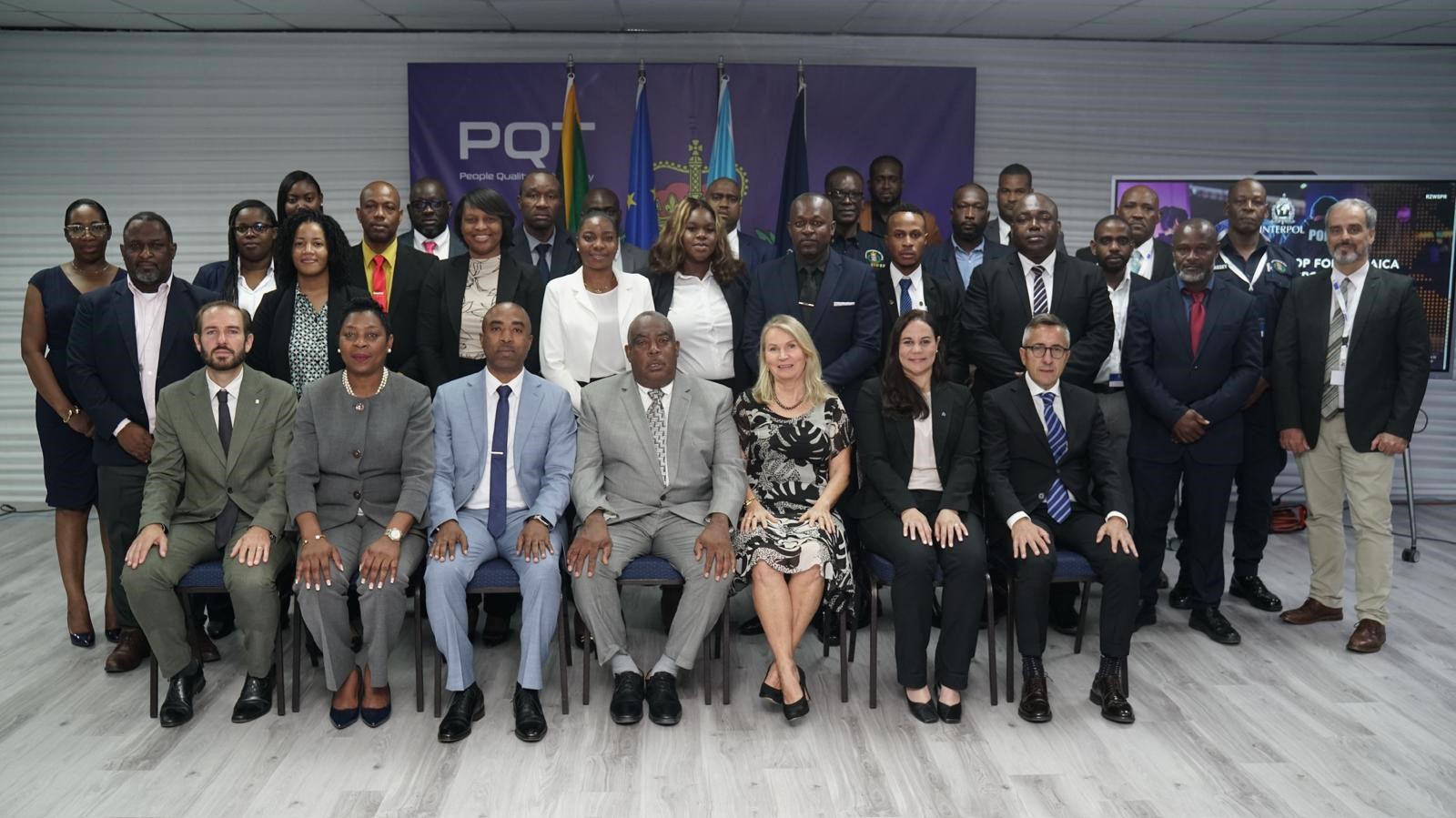
This two-day workshop introduced INTERPOL’s capabilities to Jamaican law enforcement national authorities. It paved the way for the interregional Fugitives Operation to take place in Latin America, the Caribbean and Europe under the umbrella of the INTERPOL support to EL PACCTO 2.0. This pre-operational workshop brought together 28 participants from 12 national law enforcement agencies, highlighting the importance of strengthening multi-agency cooperation to better address fugitives’ investigation. Jamaica was the first, out of the four new participating countries (Belize, Dominican Republic, Jamaica and El Salvador) to benefit from this workshop.
First Fugitives Task Force Operation
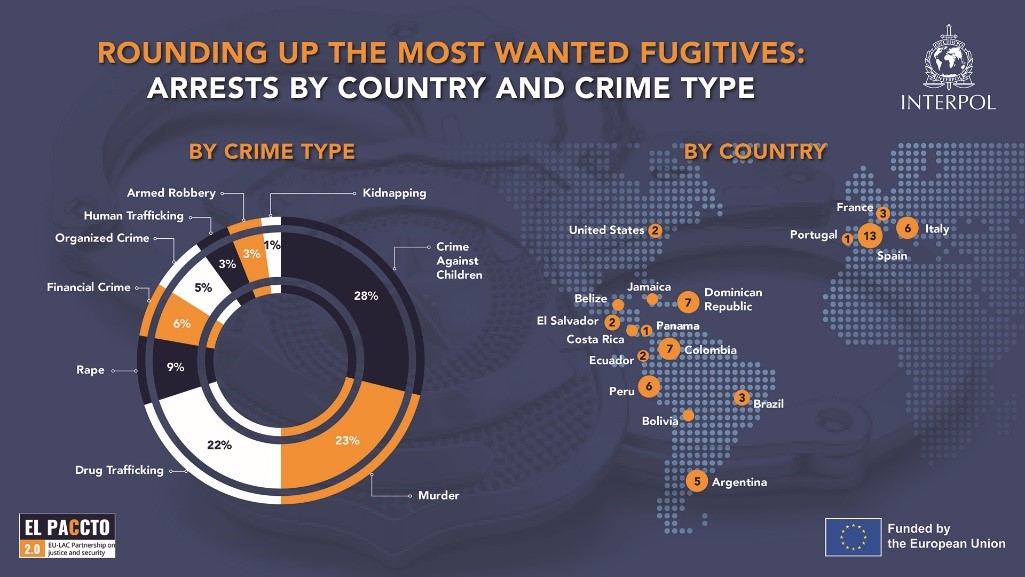
This four-day meeting was the first INTERPOL Task Force operation conducted under phase 2 , targeting many of the most dangerous fugitives in LAC and Europe. It led to the arrest of 58 high-risk criminals and the location of 28 more. Working from a list of more than 150 cases regarding individuals wanted for violent and organized crime charges, the international task force shared information and followed up on investigative leads between July and December 2024. The Fugitive Operation brought together investigators from 12 countries in Latin America and the Caribbean, as well as four countries in Europe. Among the 58 arrests, 15 of those were wanted for murder, while 14 were accused of drug trafficking and 18 of crimes against children.
Post - operational meeting
Representatives from all member countries reviewed the operational results of the 2024 exercise and outlined the strategy for the 2025 operation.
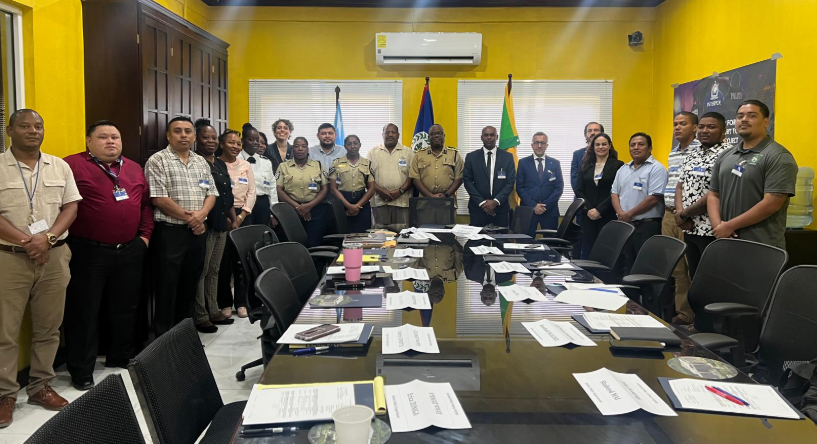
National workshop - Belize
The two-day workshop introduced INTERPOL tools and capabilities to Belizean law enforcement authorities. The meeting brought together 15 representatives from 8 national agencies. Belize is the second of four countries (Belize, Dominican Republic, Jamaica, and El Salvador) to participate in phase 2 .
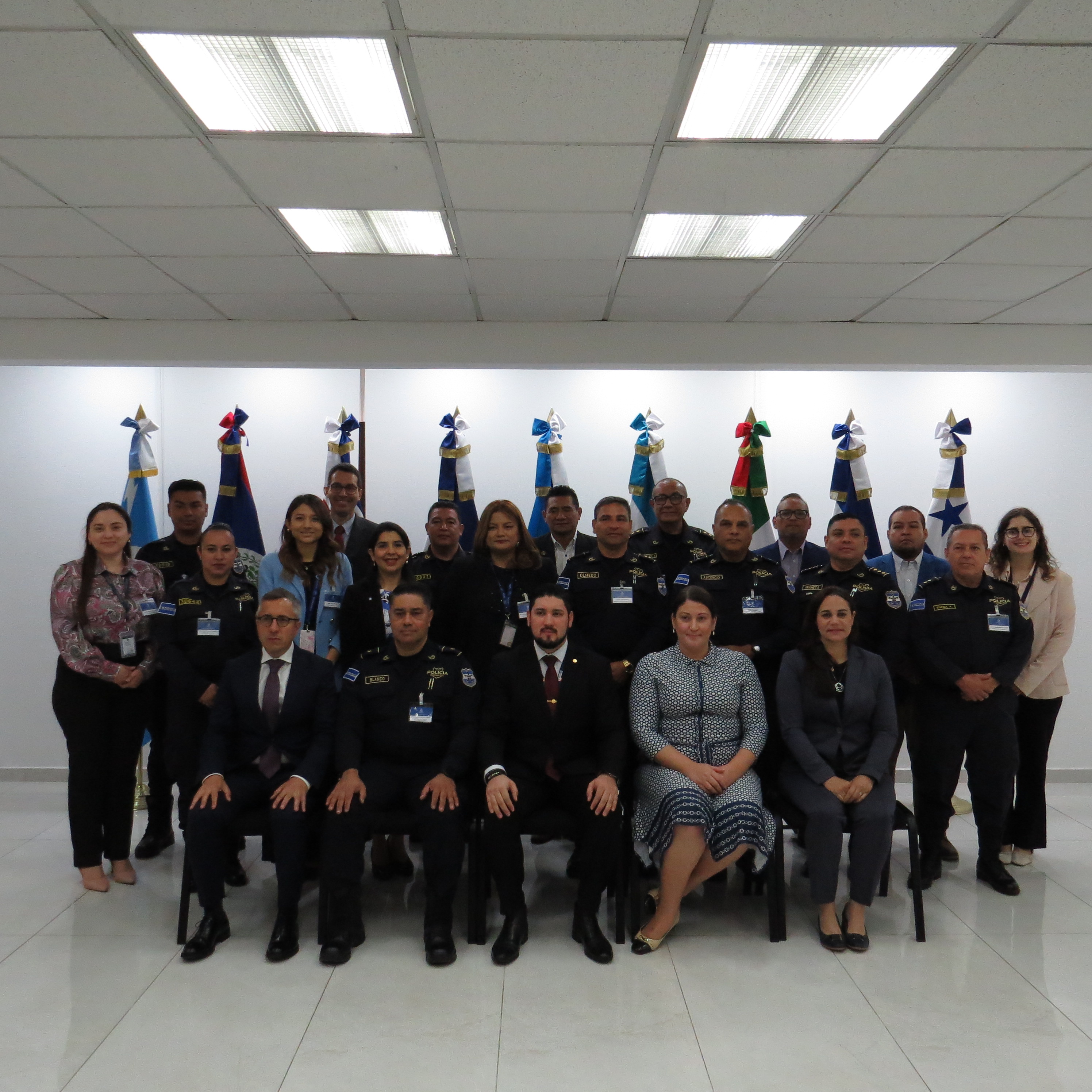
2025 Pre-operational planning - San Salvador
The 2025 Pre-Operational Meeting marked a significant milestone in the project's progress. The event brought together representatives from 17 countries, including 12 project countries, 4 EU countries and Chile, which participated as part of a pilot initiative for 2025. Through bilateral meetings and intelligence sharing, participants exchanged vital information on fugitives' whereabouts, fostering closer connections and trust among the participating countries. As a result, the meeting laid the groundwork for potential locations and arrests of high-risk fugitives under INTERPOL Red Notice, further strengthening the interregional network of fugitive investigators.
National workshop- El Salvador
In El Salvador, a two-day workshop gathered 17 participants from 8 agencies to discuss and enhance collaboration in the country's efforts to locate and apprehend fugitives. El Salvador is the third of four countries (Belize, Dominican Republic, Jamaica, and El Salvador) to participate in phase 2.
Task Force Operation- Quito
The Fugitives Investigative Support (FIS) team presented an overview of its methodology, including detailed guidance on the use of INTERPOL tools and the operational steps required throughout the Task Force cycle. A core component of the meeting was discussions on applying the Operational Guide for Prioritizing High-Risk Fugitives, intended to support countries in standardizing national processes. Operational work included intelligence-gathering on the whereabouts of priority fugitives, analysis of pending cases from both 2024 and 2025, and troubleshooting obstacles impacting ongoing investigations. The activity also provided a platform for peer-to-peer exchanges and bilateral meetings.

2025 Post-operational meeting
The 2025 Post-Operational debriefing brought together REFINE focal points to review the year's operational cycle and identify pathways to support further arrests in early 2026. The 2025 cycle concluded with 184 cases managed, 113 arrests, and 18 positive locations which included high-profile individuals linked to Tren de Aragua, MS-18, the PCC, and Albanian criminal networks. Arrests were also carried out in non-project countries including China, the UAE, and the United States, reflecting the project's growing international reach.
National Workshop- Dominican Republic
The Dominican Republic joined Belize, El Salvador, and Jamaica as a priority country under EL PAACTO 2.0, reflecting its strategic position in the Caribbean and challenges around, extraditions, and transnational organized crime. Since joining in 2024, the country has delivered strong results in fugitive location and apprehension.

Countries involved







Related documents
