





Due to our status as an international organization, we are not subject to national, regional or international procurement rules, but have developed our own regulations based on key international procurement principles. These rules are laid down in our Procurement Manual, Constitution, General Regulations and Financial Regulations.
The procurement procedures are governed by the following principles:
- safeguarding the interests of the Organization;
- cost-effectiveness;
- non-discrimination;
- transparency;
- fairness;
- integrity.
INTERPOL’s procurement is carried out through four types of procedures:
- Open call for tender;
- Limited competition;
- Request for quotations;
- Direct negotiation.

Who may supply services to INTERPOL?
We need goods and services to run our activities at all the duty stations of the General Secretariat (France, Argentina, Austria, Belgium, Cameroon, Côte d’Ivoire, El Salvador, Ethiopia, Kenya, Singapore, Thailand, United States and Zimbabwe) as well as for the National Central Bureaus in each of our member countries.
For this reason, we work with suppliers throughout the world, regardless of their nationality or background, as long as the entity concerned complies with INTERPOL’s aims which are set out in Article 2 of our Constitution.
Who may not supply services?
Any person or legal entity convicted of any of the offences below will be excluded from signing procurement contracts with the Organization:
- Participation in a criminal organization;
- Corruption;
- Fraud;
- Money laundering;
- Offences relating to professional conduct.
This also applies to any person or legal entity who has not fulfilled their obligation to pay social security contributions or taxes, in accordance with the legal provisions of the country where it is established or those of the country where it pursues its activities.
Additional exclusions may also apply depending on the transaction, and will be clearly indicated in the rules associated with the contract in question.
2025 Annual Procurement Report
The 2025 Annual Procurement Report showcases procurement and contracts data consistent with the Organization’s procurement strategy. The information in the report underscores INTERPOL’s dedication to accountability and openness, which reinforces its efforts to make informed strategic decisions and enhance stakeholder engagement. By continuously improving its processes, INTERPOL strives to better address the evolving needs of its valued supplier and client relationships.
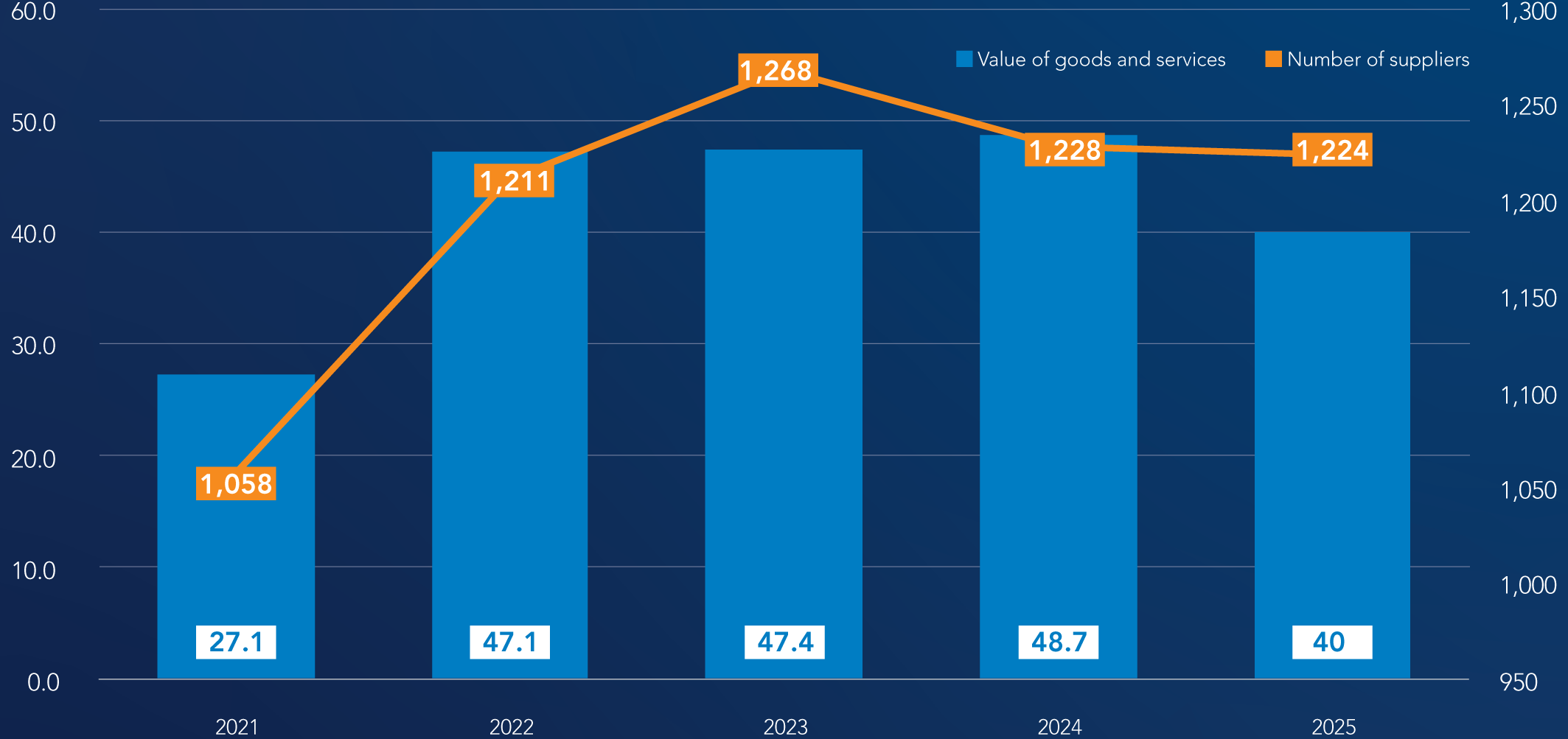
Procurement Evolution, 2021-2025
In 2025, INTERPOL spent less on procurement. However, the number of engaged suppliers remained stable, reflecting a deliberate balance between advancing supplier diversity and optimizing supplier relationships to enhance operational efficiency.
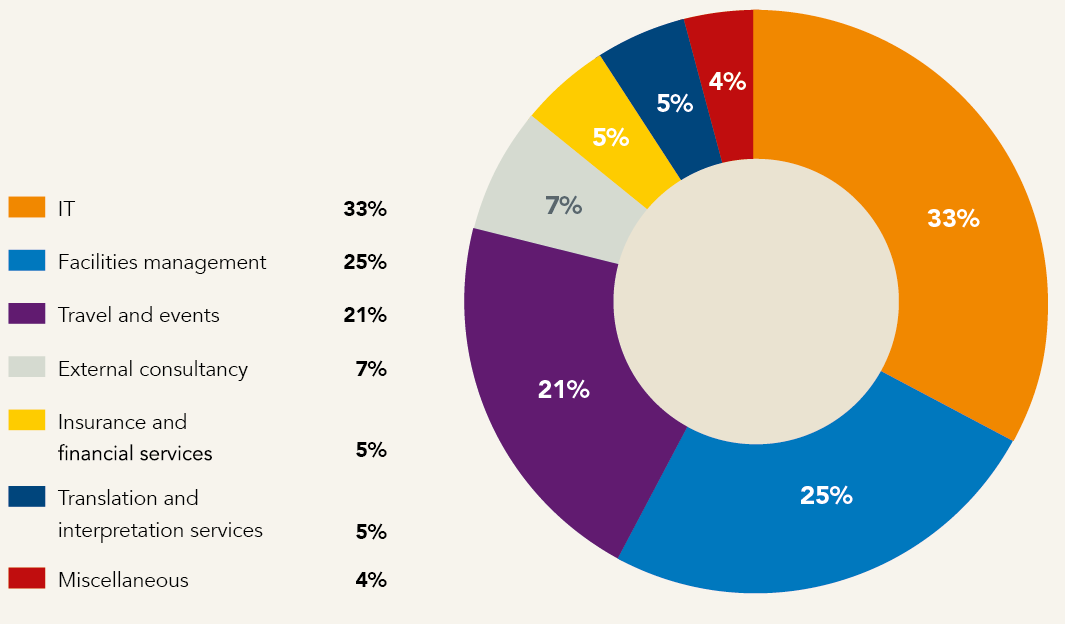
Procurement by spend category
The distribution of procurement spend across categories reflects a strong alignment with INTERPOL’s strategic priorities and operational activities.
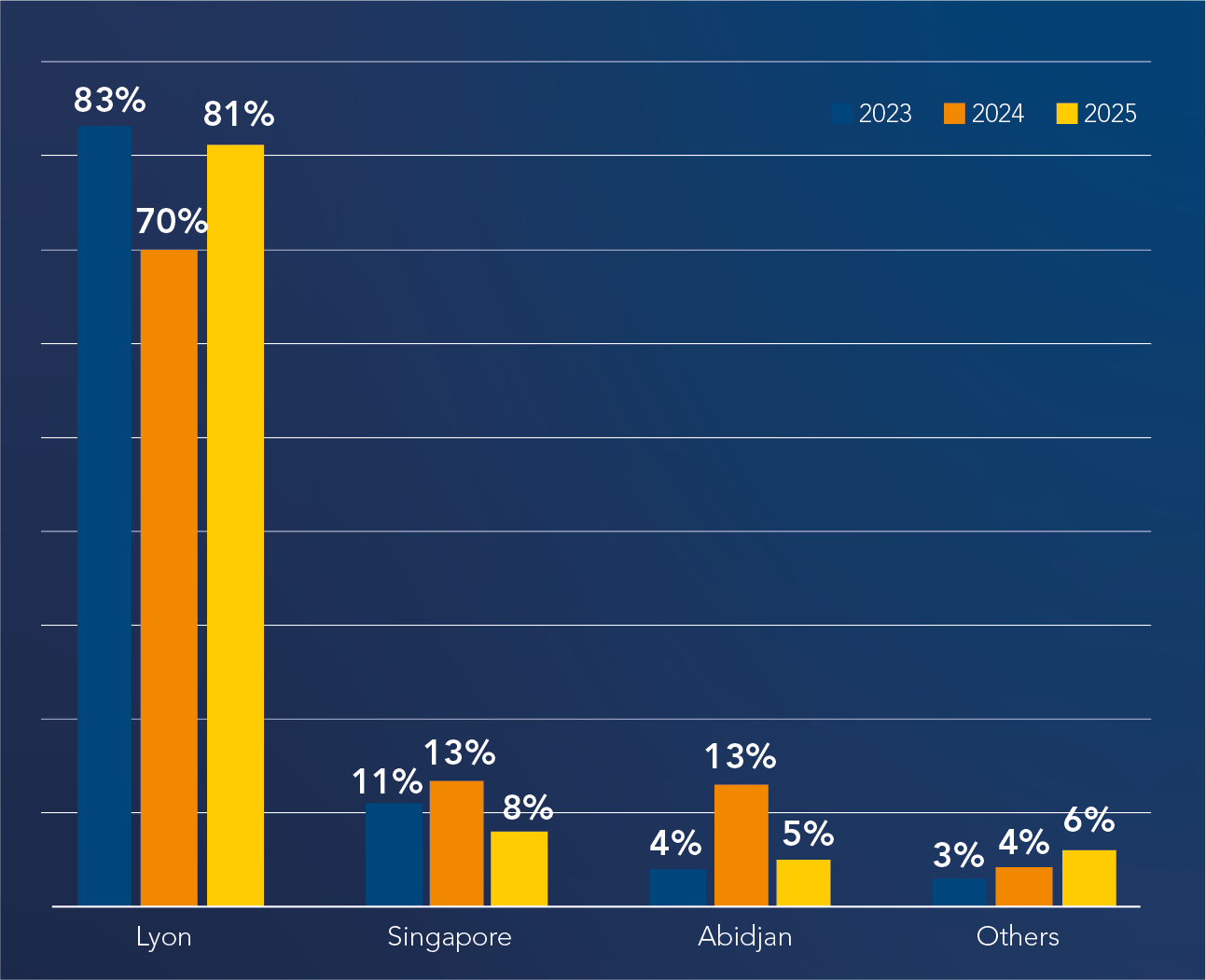
Procurement by business area
In 2025, INTERPOL’s headquarters in Lyon, the INTERPOL Global Complex for Innovation in Singapore, and the Regional Bureau in Côte d’Ivoire (Abidjan) remained the top three procurement hubs in terms of value, collectively accounting for 94 per cent of total organizational spend, which is consistent with trends observed in prior years.
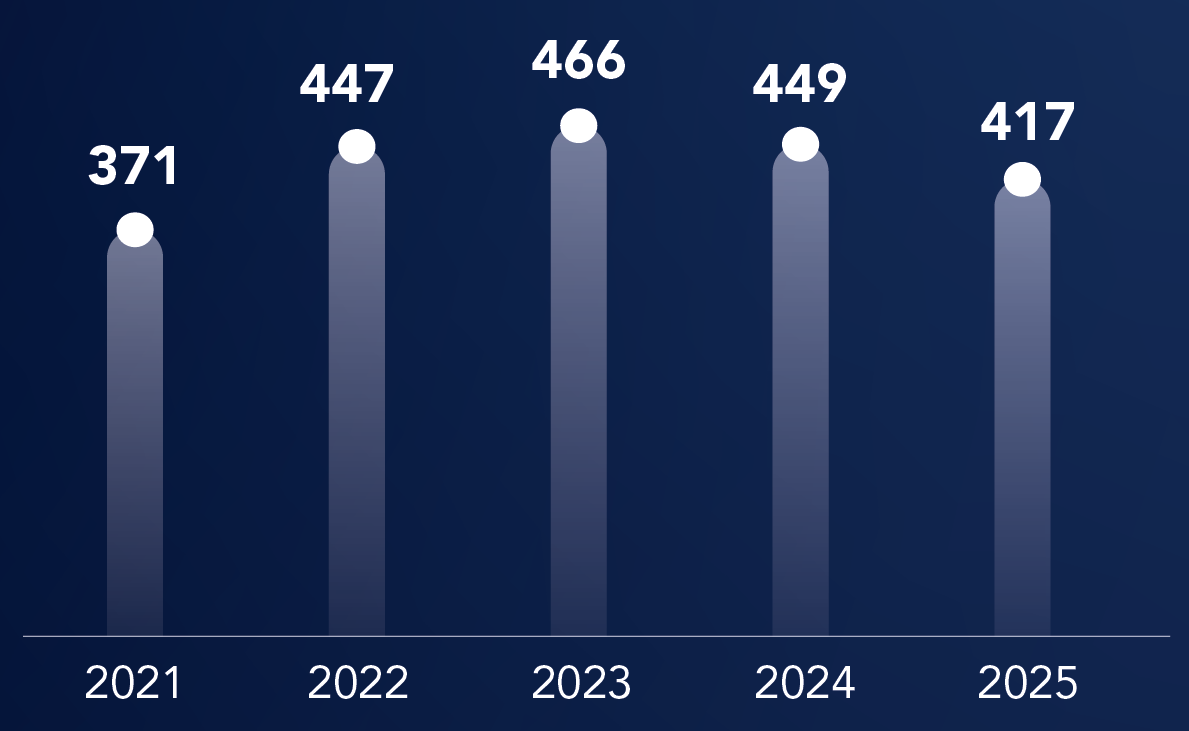
Number of contracts, 2021-2025
Contract trends remained stable in 2025, with procurement finalizing 417 contracts. This represents a slight decline attributable to the high volume of framework agreements concluded in prior years, which continue to drive procurement efficiency through pre-negotiated terms.
Related documents
