




Over 80 per cent of global trade by volume moves by sea, making maritime routes critical to the world's economy and security. Yet these waters are vulnerable: 64 per cent of the world’s oceans—the high seas—lie beyond national jurisdiction. Combined with the scale and complexity of maritime trade, this creates gaps that malicious actors can exploit, deploying increasingly sophisticated technology to do so.
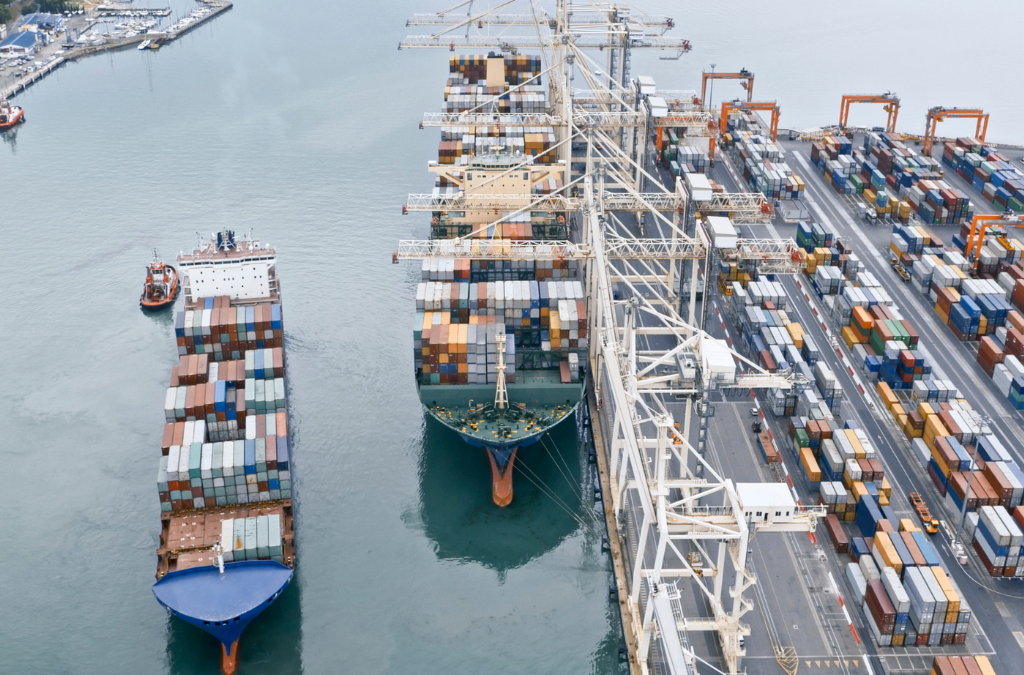
Tens of thousands of commercial vessels criss-cross the world’s oceans at any given time, day or night, and many more are docked in port. The majority travel from a departure point in one country to a destination in another, crossing both national and international waters as they go. Their crews may be made up of several different nationalities, they may carry the flag of one country and be owned by an entity from another jurisdiction and their cargo may be shipped and owned by businesses based in many more. In short, maritime trade is inherently international and a fertile environment for transnational poly-criminality. “There are overlaps between the interests of terrorist groups and various criminal networks, attracted by the potential for significant disruption or lucrative gains,” says B.G., a criminal analyst with INTERPOL’s Maritime Security unit. “They also know that security is often limited, especially in certain ports, and that investigations may be hampered by questions of jurisdiction or lack of inter-agency cooperation,” he continues. “In this complex international context, INTERPOL has a critical role to play.”
AI power in the right – or the wrong – hands
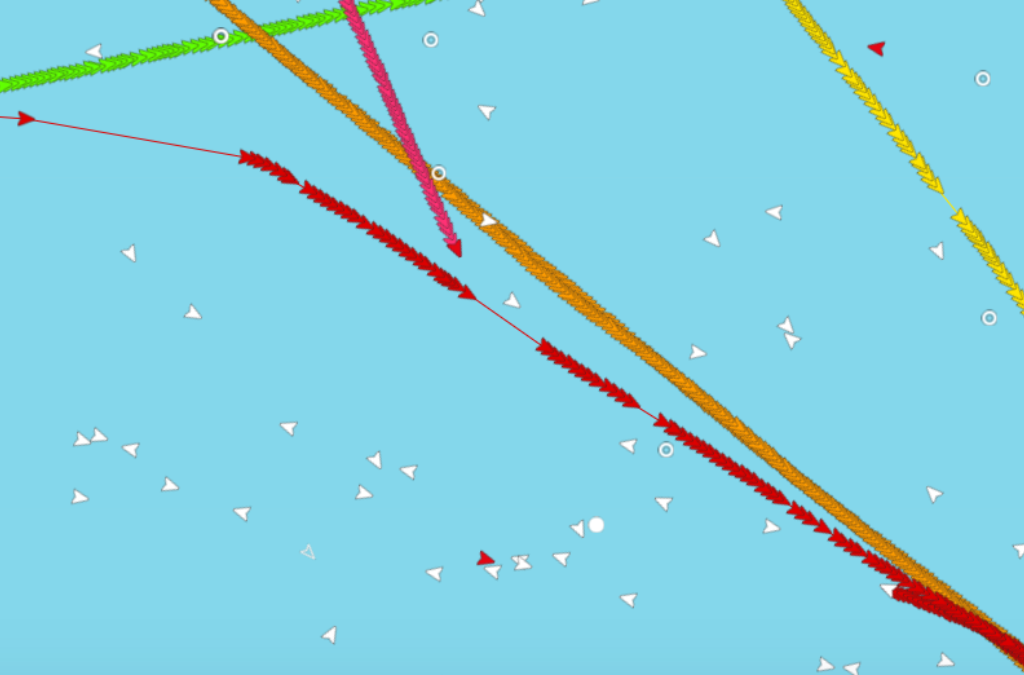
As well as providing operational support, data-driven tools such as our databases, and mentoring and training, INTERPOL’s specialist teams use state-of-the art technology to support our member countries in countering malicious activities at sea. This includes analyzing data from maritime domain awareness platforms, the sophisticated systems that help make sense of the massive amounts of information on the world’s vast shipping flows. Some of these systems use artificial intelligence (AI) to assist vessel identification and tracking, port alerts or traffic mapping. “Maritime domain awareness platforms allow us to analyze vessels believed to pose an elevated risk for involvement in malicious activities,” says B.G. “and AI can help catch the right fish in the right ocean. By creating complex queries using certain indicators stemming from observed modus operandi – geographical region, vessel behaviour at sea, type of vessel, ownership and registration irregularities – we can bring results down from thousands of vessels to a handful, allowing for deeper analysis and lead generation in support of local or regional law enforcement.” In the wrong hands, though, the same systems can be used to hone modus operandi, predict navigation routes and pattern of life at sea or gain insights into the types of suspicious vessel behaviour law enforcement is tracking. “Malicious actors are constantly innovating in the maritime domain, combining different tactics such as vessel identity tampering, frequent flag changes and location spoofing,” B.G. continues, “making it look as if a ship is picking up legal cargo in one dock when it is really delivering arms, drugs or other illegal goods in a completely different location, probably thousands of miles away.”
New threats above and below the water
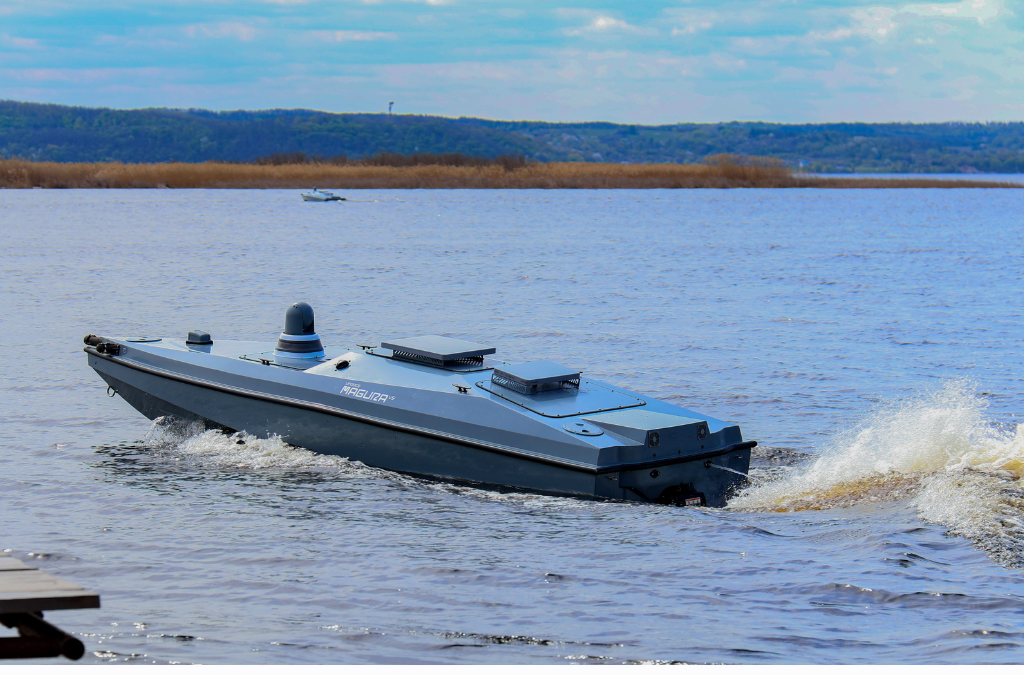
As in other criminal areas, AI is also used to produce fake documents, for individuals or, in the maritime domain, for vessels or their cargo. Malicious actors also use it to enhance seaborne technology such as uncrewed surface vessels (USV). Remotely controlled from land or sea, highly sophisticated versions of these crafts have been deployed in military scenarios with AI-powered target acquisition. Easier to produce and scale cruder USV versions have also been used by armed non-state actors, including Yemeni group, the Houthis, which has used them to target both military and merchant vessels in the Red Sea, one of the world’s most politically sensitive and economically strategic shipping lanes. Semi-submersibles are another type of vessel where technology has also shifted from traditional military or commercial use to illegal applications. Drug traffickers are known to use manned semi-submersibles or low-profile vessels, comparable to rudimentary submarines that remain partially above the water, to carry large consignments of drugs from Latin America to Europe, West Africa, or across the Pacific. Ongoing technological advances now mean that similar, remotely controlled or autonomous craft could soon be deployed at scale for shorter crossings, for example in the Mediterranean.
International cooperation against hi-tech attacks
Cyberattacks also offer relatively low-cost, hi-tech opportunities to criminal or terrorist actors to disrupt or otherwise target maritime activity, with ransomware attacks a growing concern, especially in ports where investment is low and which run older technology that can no longer be updated to face current cyber threats. Onboard navigation systems and transponders are also a potential target, with the risk that malicious actors could alter transmitted signals or gain partial control of a vessel to change its route or use it to threaten or collide with port installations or another vessel. “Until now, this threat has not materialized,” says B.G. “Malicious use of innovative technology more broadly still mainly involves organized crime present globally,” he adds, “but the potential for exploitation by terrorist and other non-state actors is real. Information sharing and international cooperation on threats in the maritime domain remain essential but are often fragmented,” he concludes, “and INTERPOL should strive to be at the forefront of technology-enabled law enforcement support as threats and tactics evolve.”