





In 2022, INTERPOL alerted the world to the emerging criminal threat of scam centres and the criminal organizations behind them. In a new modus operandi, they were luring unsuspecting job seekers with lucrative overseas job offers, before holding them captive as forced perpetrators of online fraud. Two years later, we launched a multi-partner hackathon model that revealed how social media platforms, apps and subscription websites were also being exploited. Criminals were using them to create job promises that trap victims into coerced and low-paid online labour, often involving sexual exploitation. Today, multi-form cyber-enabled human trafficking is a growing threat that impacts people and countries on all continents, requiring a global law enforcement response.

In November 2025, INTERPOL’s General Assembly adopted a resolution addressing the growing threat posed by scam centres, criminal compounds staffed in large part by victims of human trafficking. Often taken in by an apparently lucrative job offer online, they travel overseas only to have their travel documents confiscated on arrival, before being forced to target other individuals worldwide with a range of online fraud schemes, including romance scams, voice phishing and investment fraud. If they refuse or fail to meet their objectives, they may face punishment including food deprivation, beatings and torture.
Sounding the alarm on scam centres

The General Assembly resolution highlighted the need for a coordinated global law enforcement response to combat the highly adaptive criminal networks behind these crimes and their use of advanced technologies to deceive their victims. It also reflected the growing body of evidence and expertise assembled by INTERPOL and our member countries in recent years. A 25-country, INTERPOL-coordinated operation in March 2022 led to first reports of this new phenomenon in Southeast Asia, and by June that year INTERPOL had enough information to send out a Purple Notice alerting global law enforcement to this new criminal method of online recruitment. A year later, we issued an Orange Notice to warn of what had become a serious and imminent threat to public safety, and in June 2025, we reported on the global spread of this threat, with scam centres also identified in the Middle East, West Africa and Central America. Our report also revealed that the trafficking victims representing over 60 nationalities were being exploited in scam centres in South East Asia alone.
A constant watch on a growing threat
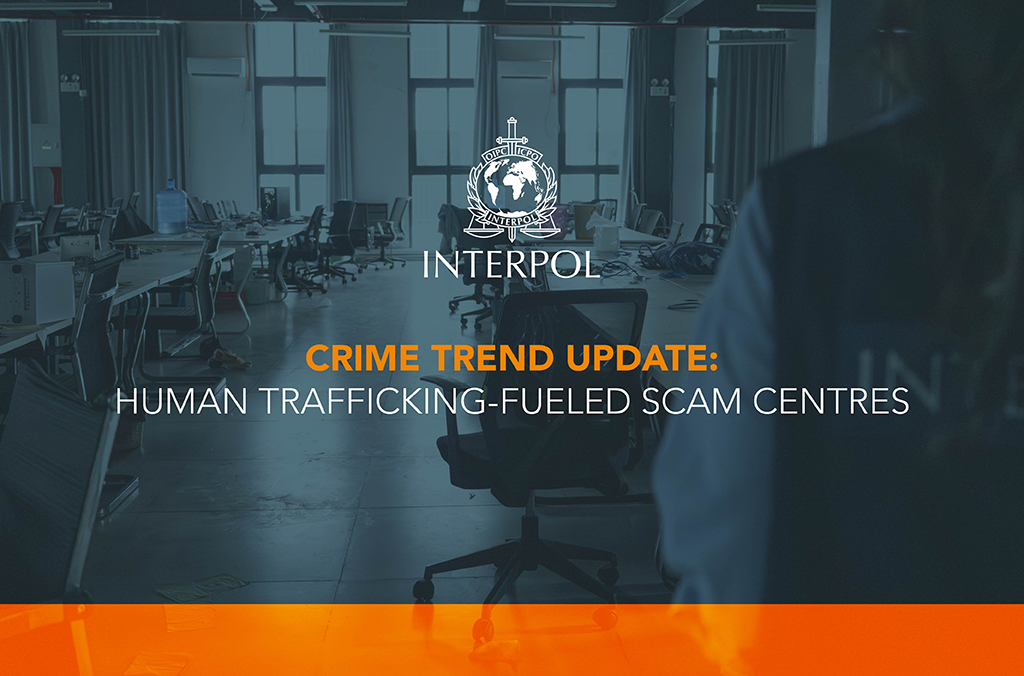
“In 2026, we know that this figure has risen to over 80, and that centres have been identified in Europe and countries not previously known to be affected such as Jordan,” says Stephanie Baroud, Criminal Intelligence Analyst with INTERPOL’S Human Trafficking and Migrant Smuggling unit. “We have also observed scam centres moving deeper into national territories, away from Special Economic Zones along borders, being set up in luxury apartments or adapting to police crackdowns by switching to temporary structures that are easier to move and more difficult to detect.”
As we continue to analyze data and information on scam centres from all regions, INTERPOL plans to publish a new report with an update on the latest situation and emerging trends in 2027.
Innovation against online exploitation
INTERPOL is also at the forefront of bringing stakeholders together to both fight and raise awareness of other forms of cyber-enabled human trafficking, working with law enforcement and security partners and the private sector to identify online content that targets and deceives vulnerable individuals, potentially leading to their exploitation. In 2024, we co-organized an innovative operation with OSCE, to counter a trend involving victims being lured by fake or deceptive job offers from Latin America to Europe, where they are exploited and often forced into prostitution. Also involving, UNODC, Europol, Meta and NGO STOP THE TRAFFIK, this first transnational hackathon on cyber-enabled human trafficking leveraged INTERPOL’s capabilities in human trafficking, facial recognition, cybercrime and criminal analysis to identify dozens of potential victims and hundreds of potential exploiters, recruiters and facilitators, as well as suspicious usernames and URLs.
Disrupting online migrant smugglers
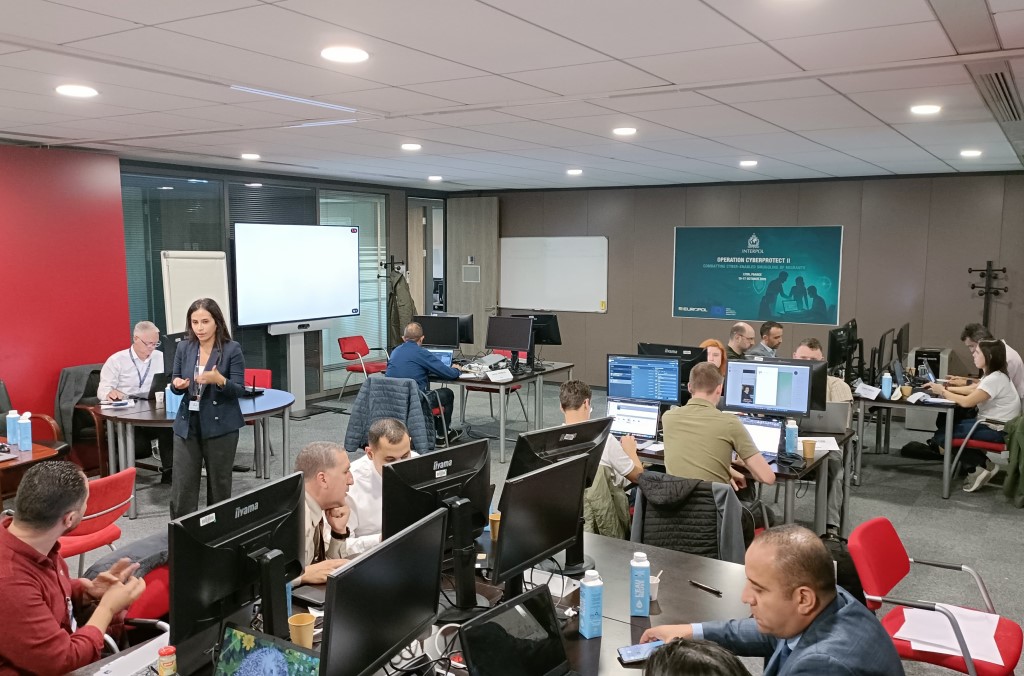
A second edition in 2025 added further support from the University of Malta and AI-powered data intelligence specialist S2W and targeted cyber-enabled smuggling of migrants in the Mediterranean. It led to the detection of high numbers of user handles and URLs on social media and messaging platforms, potential perpetrators, telephone numbers and more, as well as qualitative intelligence on accounts offering crossings to Europe, guidance on entering Europe, or fake travel and identity documents. All suspicious content was then flagged to the hosting platforms for analysis and removal.
Growing support to take down the traffickers

This year, our latest hackathon focused on the emerging trend of subscription-based content platforms used to facilitate human trafficking and sexual exploitation. Significant findings included a prevalence of ads featuring female models from South America, information on content producers being bought and sold for large sums and paid at extremely low rates and social media platforms being used by e-pimps to exchange strategies. “This year’s hackathon also involved a second social media giant, TikTok, cybersecurity leader Group-IB and the World Economic Forum’s Cybercrime Atlas,” says Stephanie Baroud. “After our first two hackathons, we began to see more member countries and external partners reaching out to us, a strong sign of the growing impact of this kind of approach.”
Keeping cyber-enabled trafficking on the global agenda
“Combating cyber-enabled human trafficking requires a wide range of expertise from law enforcement and beyond,” says Stephen Fry, INTERPOL Executive Director of Investigation Support, who oversees INTERPOL’s operational support to member countries. “As well as our leadership in countering human trafficking, we bring our extensive knowledge and experience in fighting cybercrime and financial crime, which collectively provide the effective skillsets to combat this crime type” he continues. “And, in parallel with support from all of our 196 member countries in this field, we are able to leverage and share their local perspectives and knowledge. Added to that, our ability to build robust and secure partnerships with the private sector gives us access to expertise and data that are essential in supporting INTERPOL’s member countries in fighting this transnational crime threat,” he adds. “We are proud of our successes so far and committed to ensuring that disrupting cyber-enabled human trafficking remains a priority on the global law enforcement agenda.”