




Timeframe: 2022-2026
Budget: USD 7 million
Donor: Safe Online
The situation
In our ever-evolving digital landscape, the internet has become an integral part of children’s lives, offering opportunities for communication, education and entertainment. Yet alongside these benefits, it also poses serious risks to their safety and well-being.
Despite the growing presence of children online, limited data on how they interact with digital technologies makes it difficult to prevent and respond to online abuse and exploitation. There is an urgent need for comprehensive, evidence-based understanding of online child sexual exploitation and abuse, particularly at national and regional levels.
About the project
The Disrupting Harm project was created in direct response to this data gap. It is an innovative, multi-sectoral research initiative that generates high-quality evidence on technology-facilitated sexual exploitation and abuse of children. Established in 2019 and funded by Safe Online with a total investment of USD 15 million, the project features research jointly conducted by ECPAT International, INTERPOL and UNICEF Office of Strategy and Evidence – Innocenti.
Through a unique research methodology developed by the three partners, the project examines when and how digital technologies are used to facilitate abuse. It includes the perspectives of children, survivors, parents, law enforcement officials, justice professionals and frontline workers.
By understanding multiple perspectives and experiences, Disrupting Harm identifies priority areas for intervention by governments, industry, children’s rights organizations and other actors. In particular, the project places importance on speaking to children and those with lived experience to help guide the way towards a safer digital world for children everywhere.
In 2022, an initial phase of the project was completed in 13 countries across eastern and southern Africa and Southeast Asia with major successes. The project has already supported changes in legislation and policy to better protect children and has informed a range of interventions at the national level.
However, the work is far from done. Technology-facilitated sexual violence against children is a crime that knows no borders. Digital technologies continue to evolve, often without enough consideration of their impact on children's rights. The success of Phase 1 of the project has led to a renewed commitment from Safe Online for more funding and additional research in 12 countries across Latin America and the Caribbean, Europe and Central Asia, the Middle East and North Africa, and South Asia.
Project activities
The Disrupting Harm research methodology includes the following activities:
• Analysis of national legislation and policies related to online child sexual exploitation and abuse.
• Conducting nationally representative household surveys with internet-using children and their caregivers.
• Engaging with national law enforcement agencies and justice professionals to understand their capacity to effectively respond to crimes against children.
• Interviews with children and young people who have experienced online sexual exploitation and abuse during childhood.
• Interviews with frontline service providers and justice professionals who are working with cases of online child sexual exploitation and abuse to understand their practices, capacities and needs.
Project updates
Phase 2
In 2022, Phase 2 of the Disrupting Harm project was launched, with the addition of 12 new countries: Armenia, Brazil, Colombia, Dominican Republic, Jordan, Mexico, Montenegro, Morocco, North Macedonia, Pakistan, Serbia, and Tunisia.
The expansion into new regions provides a critical opportunity to broaden our understanding of online child sexual exploitation and abuse, and to advocate for a more comprehensive and evidence-based approach to addressing this issue.
The further USD 7 million investment from Safe Online enables robust research on online child sexual exploitation and abuse, conducted in collaboration with national expert organizations.
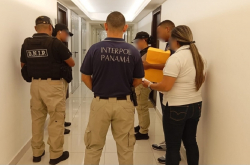
In this second phase of the project, INTERPOL and its National Central Bureaus (NCBs) engage with law enforcement agencies and important stakeholders to facilitate in-country visits, with the aim of understanding the current law enforcement response in each country.
By 2026, the Disrupting Harm project will have generated national data in 25 countries across six regions. The project will also produce evidence-informed roadmaps to help these countries prevent and respond to online child sexual exploitation and abuse, creating a safer world for all children, both online and in-person.
The country reports from Phase 1 and updates on Phase 2 of Disrupting Harm can be found here: Safe Online - Disrupting Harm
Phase 1
The first phase of the project, with a budget of USD 7.5 million, was implemented from 2019 – 2022 in 13 countries across South-East Asia and Eastern and Southern Africa.
Headline findings from the first phase:
• At a national level, between 1% and 20% of children encountered some form of clear online sexual exploitation and abuse in the year before the survey. Scaled to the general population of internet-using children, these estimates represent millions of children in each country.
• Sexual abuse often occurred through a mix of online and in-person interactions shattering the misconception that it remains limited to the digital world
• Almost a third of children did not disclose the sexual abuse, with nearly half citing a lack of knowledge about where to seek help. On average only 3% reported these crimes to law enforcement or helplines.
• Most countries lacked frontline service providers equipped to support victims.
• Specialized police units dedicated to combating online child sexual exploitation and abuse play a crucial role in improving national and global responses.
• Online CSEA is significantly linked with greater risk of both self-harm and suicidal ideation across seven countries included in Disrupting Harm. Whether or not a child has experienced in-person violence, experiencing online CSEA further increases their risk of mental health problems.
With strong efforts from national partners and stakeholders, the findings and recommendations from the first round of Disrupting Harm studies supported significant policy and legislative changes, including:
• In Malaysia, legislation was amended to criminalize sexual extortion and livestreaming of child sexual abuse, aligning with Disrupting Harm recommendations.
• Indonesia used Disrupting Harm insights to develop a national roadmap on child online protection under a presidential decree. This initiative informed revisions in national standards, training modules for child protection services and the creation of a web-based platform to enhance children's awareness of violence and online safety.
• Tanzania integrated findings and recommendations from the project into education and training materials developed by the Ministry of Health units for community development, gender, elderly and children
For more findings from the first phase of Disrupting Harm including data insights, infographics and videos: Safe Online - Findings