




Timeframe: 2022 - 2026
Budget: EUR 4.4 million
Donor: Ministry of Foreign Affairs of Denmark
The situation
The Gulf of Guinea is a vital hub for international trade and the region’s ports are seeing exponential growth, which benefits the entire community of nations across the Economic Community of West African States (ECOWAS) and the Economic Community of Central African States (ECCAS). However, over the past decade, this region became the world’s top piracy hotspot. Highly experienced pirate groups kidnapped over 400 seafarers for ransom from merchant vessels in the Gulf of Guinea between 2019 and 2023. Additionally, some pirate attacks in the region involve the stealing of oil products, which are later processed and sold on the black market.
The maritime domain in the Gulf of Guinea facilitates a plethora of other criminal activities such as illegal, unreported and unregulated fishing (IUU), trafficking in counterfeit goods, drugs and arms, as well as trafficking in human beings and smuggling of migrants. Terrorist attacks against port infrastructure represent another key risk in the region. All these security threats have a serious impact on the socio-economic development of both coastal and landlocked regional countries.
Stronger law enforcement cooperation at the regional level is essential to address these threats and ensure a secure maritime environment. The role of INTERPOL in this process –facilitating the exchange of information, identifying urgent threats, supporting investigations of maritime crime and promoting best practices– is crucial. This was recognized in United Nations Security Council Resolution (UNSCR) 2634, which urges all UN Member States “to share information with INTERPOL for use in the global piracy database through regional information sharing arrangements.”
Project aims
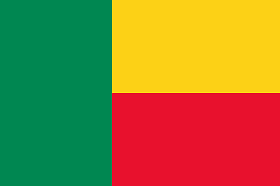
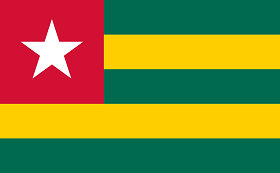
Project WATA is closely aligned with another ongoing initiative, AGWE, and shares a common goal of enhancing maritime security in five key countries: Benin, Côte d'Ivoire, Ghana, Nigeria, and Togo.
Project WATA aims to:
- Promote intelligence efforts and international cooperation to combat maritime crimes and terrorist attacks;
- Improve interagency cooperation between investigators and justice sector officials in complex, maritime crime cases.
Project activities
As part of Project WATA, INTERPOL provides sustainable support to all relevant maritime security stakeholders in the region in order to make a long-term difference to maritime and port security.
Activities under this project include:
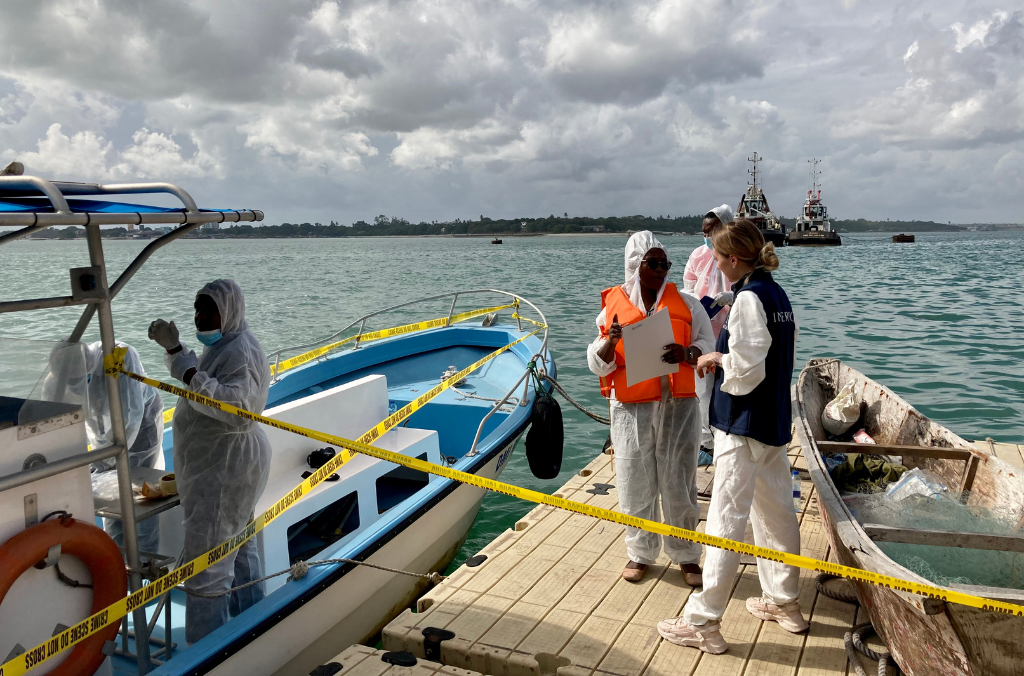
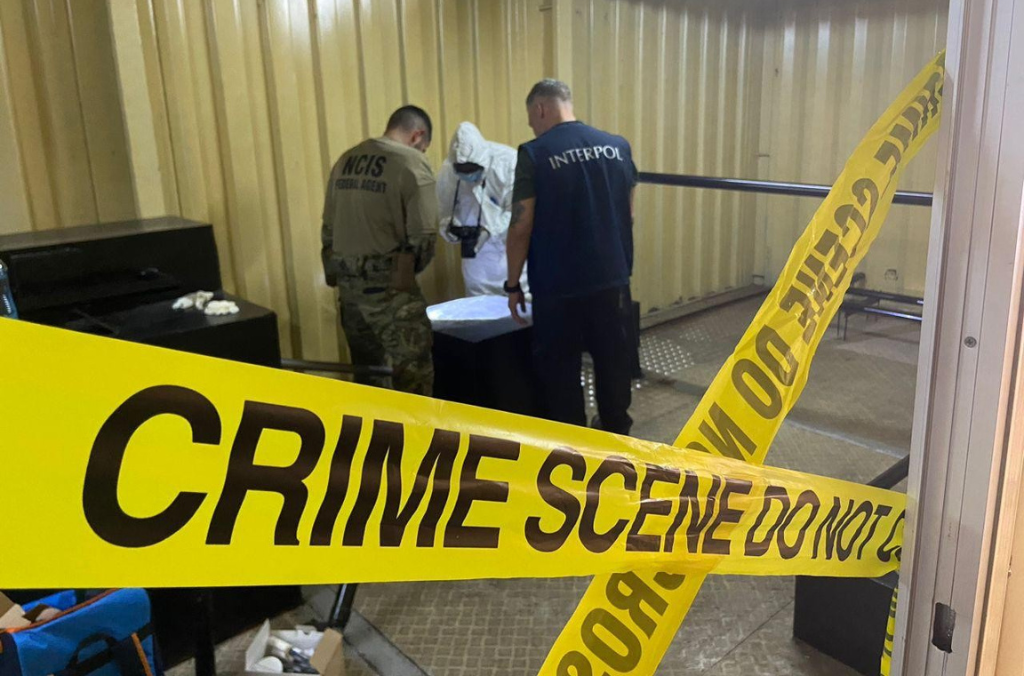
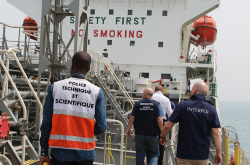
- Improving the crime scene management capabilities of first responders (navies): Navies play a crucial role during investigations and prosecutions as they identify different types of criminal activity and preserve the crime scene;
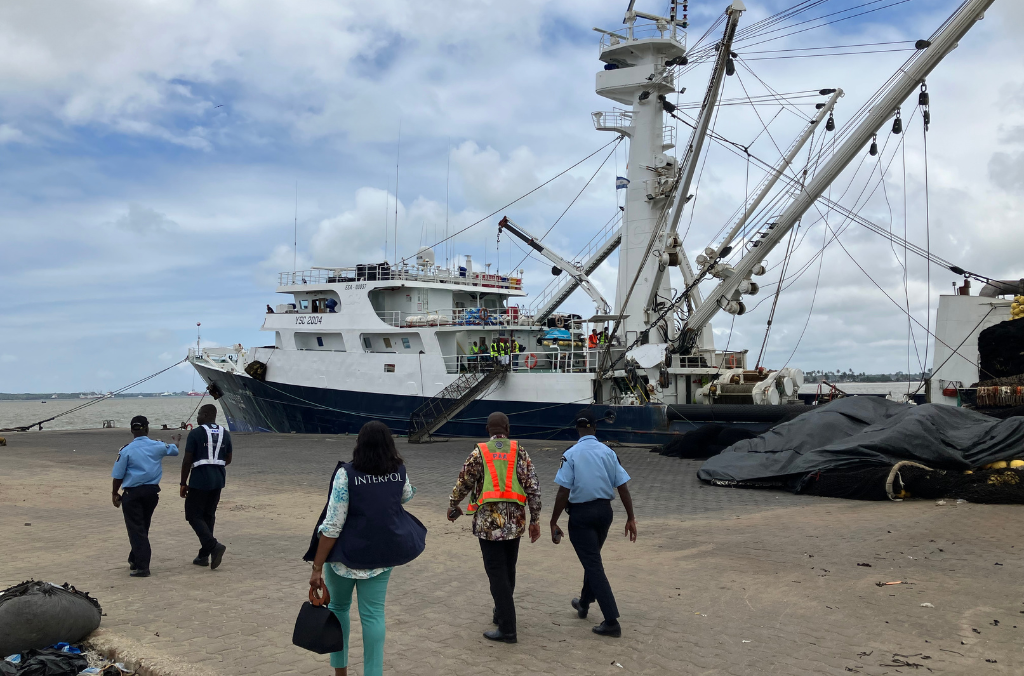
- Strengthening security of port infrastructure. Capacity building helps target criminals who exploit maritime routes and poorly protected infrastructure and border crossings;
- Advanced interviewing of victims and witnesses: Professional interviewing techniques are key to most successful investigations;
- Producing a dedicated training curriculum to examine the investigation of different types of maritime crime and terrorism. Analytical reports are also produced at the request of member countries;
- Investigative and analytical support to counter any type of maritime crime, including transnational organized crime and terrorist activities. It includes case coordination meetings, deployment of operational support teams and preparation of analytical reports at the request of member countries;
- Updating the existing Guide for Investigating Acts of Maritime Piracy and tailoring it to the West African context. We will expand its scope to encompass all types of maritime crime and terrorism. We will then integrate it into the national Standard Operating Procedures (SOPs).
KEY SUCCESSES
- National trainers delivered crime scene preservation and evidence collection courses to 553 officers.
- Beneficiary countries have improved their capabilities to coordinate at the inter-agency level, process a crime scene, and conduct victim, witness, and suspect interviews.
- Beneficiary countries have improved their capabilities related to port security.
- Two successful piracy prosecutions in Togo and in Nigeria, as well as a prosecutions of crew members involved in drugs trafficking by sea in Côte d’Ivoire supported.
- In cooperation with international partners, facilitated information sharing that resulted in the seizure of 4.7 tons of cocaine in the Gulf of Guinea.
- Organized investigative support meetings that led to the arrest of a high-ranking organized crime group member involved in international drug trafficking by sea affecting West Africa.
- Supported Nigeria and Togo to publish several INTERPOL diffusions and Blue Notices concerning maritime piracy suspects.
- Co-organized the first counter-terrorism INTERPOL operation in West Africa, achieving a good level of hits, including one for maritime piracy, and identifying key gaps that countries need to address in their fight against maritime-based crime.
Project updates
Since the beginning of the project, the team has been successfully implementing key activities under the three pillars of the project: Capacity building on crime scene preservation and evidence collection; Port security; and Regional cooperation. The most recent examples include:
Regional training on identity and travel documents
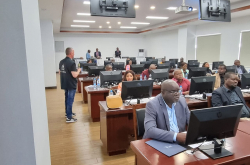
In April 2024, a specialized training on identity and travel documents was delivered to 27 law enforcement agents from Bénin, Côte d’Ivoire, Ghana, Nigeria, and Togo. The session aimed to equip officers from various services involved in maritime and port security with the skills to detect counterfeit and genuine documents, including the anatomy of authentic documents and techniques used by criminals. The primary objectives of the training program were to enhance expertise in identifying forged travel and identity documents and to effectively prevent such fraud.
Participation in Regional Exercises
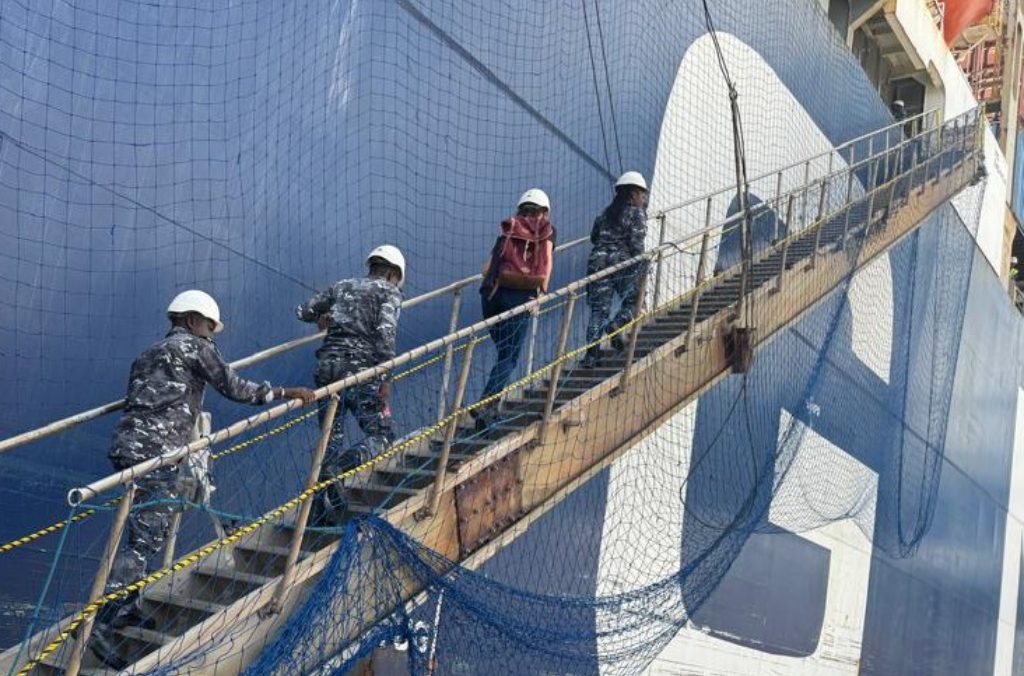
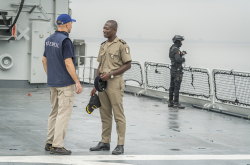
INTERPOL supports regional navy exercises, such as the Grand African NEMO and Obangame Express, which aim to promote inter-agency cooperation and enhance maritime security. In 2024, the execution phase of Obangame Express Exercise 2024 (OE24) in Ghana brought together law enforcement and naval authorities to conduct a crime scene exercise and moot trial. Exercises like these are crucial in testing national legislation and strengthening regional cooperation to combat maritime crime.
Operations
In 2023 and 2025, INTERPOL successfully implemented Operation SCREEN, jointly coordinated by the Maritime Security Unit and the Counter-Terrorism Operations in Africa unit. The objective of the operation was to target the movement of Foreign Terrorist Fighters (FTFs), their facilitators and suspects of serious organized crime using maritime routes as well as airports and land borders. In September 2024 and November 2025, project WATA team supported the implementation of Operation LIBERTERRA II, focused on combatting the Smuggling of Migrants, Trafficking in Human Beings and other related crimes.
INTERPOL Policing Capabilities Training
In order to strengthen regional intelligence efforts and cooperation to counter transnational organized criminal groups and terrorist activities, INTERPOL delivered a specific training on INTERPOL Policing Capabilities three years in row since 2023. Maritime security being inherently linked to multiple types of crime, INTERPOL invited in-house experts on drugs, human trafficking and smuggling of migrants, financial crime and anti-corruption, and counter-terrorism in order to deliver a comprehensive training on INTERPOL’s capabilities and support available to countries.
Mentorship
INTERPOL regularly organizes mentorship missions in order to provide direct support tailored to the needs. In March 2024, two INTERPOL Criminal Intelligence Officers from the Maritime Security Unit and the Counter-terrorism Operations team delivered a mentorship mission in coordination with Togolese counterparts, providing investigative support on ongoing Maritime Investigations.
Countries involved



Related documents

Related news
Global experts warn of evolving chemical security threats
1 October 2026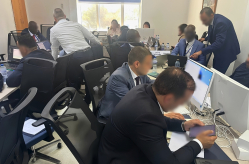
Counter-terrorism operation nets eight Red Notice suspects
16 September 2026