





Global headlines and a growing body of research agree: young people are becoming increasingly radicalized and increasingly involved in terrorist activities as a result. INTERPOL’s new analysis report, Youth Radicalization, confirms the trend. 70 per cent of terrorism-related detainees in France. 71 per cent of detainees charged with terrorism-related crimes in Singapore. Almost one tenth of terrorism cases in Canada. All of these statistics, taken from the report, refer to or involve young adults, youths and minors.
Earlier this year INTERPOL published an analysis report reflecting growing concern about the increasing radicalization of young people worldwide and the growing threat the phenomenon represents to both young people and society as a whole. Based on extensive global research, the findings of the law-enforcement-only report, shared in March 2026 with our 196 member countries, are clear: youth radicalization has become a critical factor in the recruitment and mobilization of terrorist and violent extremist operatives, young people have increasingly become involved in terrorism-related activities and the speed at which they are radicalized appears to be increasing, with some research suggesting it may take only a matter of weeks.
Manipulating vulnerable targets
“For the purposes of the report a youth was defined as a person aged 18 or younger, and a child as a person aged 14 or younger,” says Kayla Cooper, Criminal Intelligence Analyst with INTERPOL’s Counter-Terrorism Directorate and author of the report, “and we clearly found that this population group is particularly vulnerable to extremism across all ideologies. Childhood, and especially adolescence, is a time of great emotional upheaval,” she continues. “Young people have not yet developed sophisticated critical thinking skills and some are more likely to accept external opinions without seeking out counter narratives. They may also reject their family or community values and become socially isolated, making them more receptive to extremist groups or individuals that reach out to offer them a new support system. From there, the path to radicalization becomes shorter and simpler”.
The report also found that, as well as their vulnerability, terrorist and violent extremist groups target children and youth because society sees them as less of a threat and they therefore attract less suspicion. Acts of terrorism perpetrated by young people are also more likely to shock, and so boost the extremist group’s visibility, while a lower understanding of the risks involved means they may show less anxiety during attack planning or perpetration.
Exploiting online engagement

The gateway to these digital natives is the internet and extremist groups and individuals reach out to them through social media, online games, chat communities or encrypted messages. Social media algorithms mean that there may be no need for direct contact initially, with users receiving increasingly extreme material as they scroll, like, comment or share posts and videos. Their activity may also mark them out as potentially receptive to further targeting, either with more material or through a direct, often apparently innocuous, contact. “The aim is to build up a rapport with the young person, for example by slipping in jokes and seeing how they react,” says Kayla Cooper. “Online games are fertile ground for this behaviour and unless their chats are being monitored for some reason, it's a very secure way to communicate with a significant number of children with little or no risk.”
New trends: salad bar ideology and violence-as-a-service
The report identified groups targeting young people across a wide range of extremist ideologies, including the ‘salad bar’ approach, a phrase coined by former US FBI Director Christopher Wray, where a young person becomes radicalized in support of a mixture of ideologies, the common denominator of which appears to be violence. Others may pick and choose aspects of several ideologies and use them to create their own extremist view of the world. Another emerging phenomenon involves violence-as-a-service, where young people are contacted via direct messaging on social media applications and offered money to commit an act of violence. “The amounts involved are relatively small, but enough to be attractive to youths and children, who are also told that sentencing would be light if they were caught,” says Kayla Cooper, “whereas the method protects the person placing the order from the crime and therefore also potentially from prosecution.”
Countering Islamic State online

Alongside these recent trends, groups representing extremist views including misogyny, nihilism, extreme left-wing politics and, in particular, extreme right-wing politics and jihadism, continue to target young people for radicalization and recruitment online. Islamic State, or Daesh, is one of the best known and most active. The Global Coalition against Daesh, an INTERPOL counter-terrorism partner, has been monitoring and countering its propaganda since 2014. “Youth radicalization is fundamental to Islamic State, simply because it is thinking carefully about its future,” says Martyn Warr, Head of the Counter Daesh Communications Cell at the Global Coalition. “It ran schools in Syria and Iraq before losing control of its territory there and continues to offer educational services in other regions, including Africa, but their main propaganda outlet is online platforms which they flood with material aiming to indoctrinate, radicalize, recruit and deploy young people because they are essential to its survival.”
These huge quantities of digital material, including videos, newsletters, games and more, allow Islamic State (IS) to identify potential targets, but are also tracked by the Global Coalition, which has been able to verify that IS then uses sophisticated marketing techniques to segment audiences and reinforce messaging to those identified as most vulnerable. “This has enabled us, in turn, to design counter-messaging campaigns specifically targeting the 16 to 35 age group,” says Martyn Warr, “and we know they are conscious of us because they regularly advise their supporters to ignore our messaging and protect their operational security,” he continues. “Social media messaging has also enabled us to support the repatriation of Iraqi nationals, including children, from al-Hol camp in Syria, now closed, but previously home to thousands of women and children associated with Daesh.”
Building a community of online allies
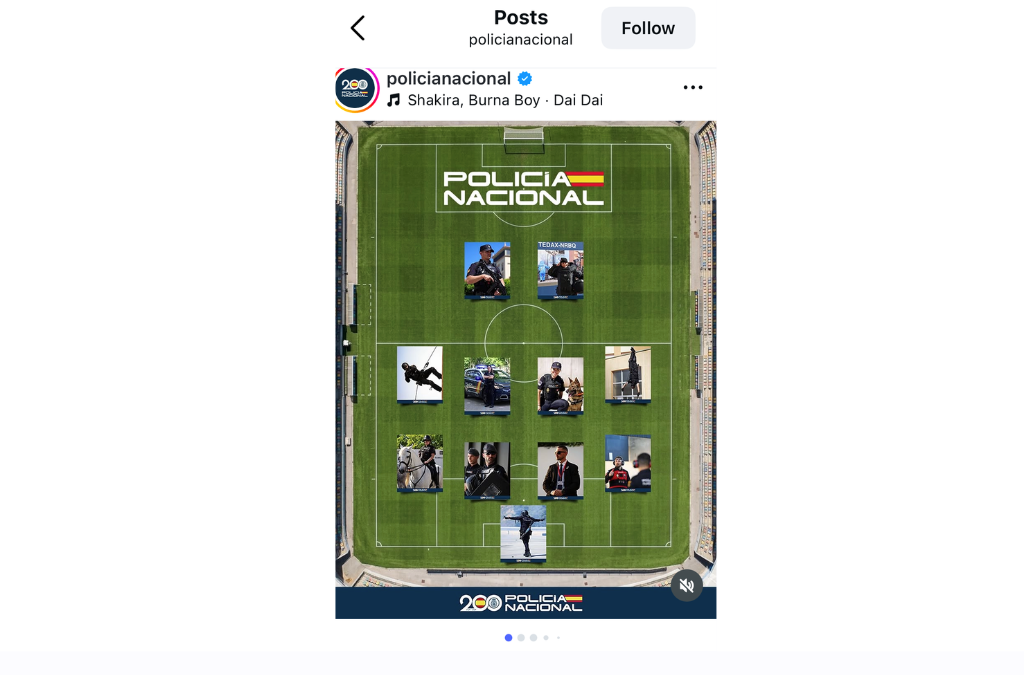
Using the tools, techniques and codes of social media to target young people and influence their behaviour can also be effective in a law enforcement setting and Spain’s Policia Nacional has proved highly successful in doing so. In 2013, the force introduced a style using informal language, humour and popular culture, but always incorporating law enforcement messaging. Today, it has over ten million followers across the main social media platforms and messaging apps, including 2.5 million on TikTok, the most popular with young people. “We are happy to have so many followers, but our objective is not to get more,” says Laura Garaboa, Sub Inspector with Spain’s Policia Nacional. “We aim to be useful to our citizens and to solve crimes, and the interactions and comments we receive show that it’s working.” Content includes preventive warnings about new online scams, for example, explanations of how to report abusive content or requests for information. In one recent case involving a minor at risk of sexual abuse, online responses allowed officers to rapidly identify the victim and contact their family. “Our social media approach has helped change public perceptions of the police here in Spain and the scale of their response is often remarkable,” adds Laura Garaboa. “Counter-terrorism policing may involve more sensitive information, but I believe that similar approaches could also help reach and influence young people who are vulnerable to radicalization online.”
INTERPOL as a counter youth radicalization hub
This is also one of the conclusions of the INTERPOL Youth Radicalization report, which recommends considering “the creation of digital counter-narratives and online spaces that speak to the needs of lonely, disenchanted youth”. Other recommendations include considering “enhanced digital monitoring by tech companies to moderate content and flag extremist activity in real time” aiming to provide a “more thorough approach to identifying at-risk youth”. The report also includes a glossary of terms commonly used in extremist spheres online or by gaming communities. Member countries have been asked to add their versions of these terms, including those expressed in their local languages, with the aim of supporting investigations by compiling a global dictionary of terms to be aware of. “The report is first and foremost a tool to assist our colleagues worldwide by informing them of the scale of the problem and recommending action,” says Kayla Cooper. “If the policing community can approach youth radicalization with informed understanding, we are likely to achieve more effective results.”